
The capital is not where the photographs are
Most Iceland travel guides recommend Reykjavík as the natural base for a photography trip. It has the largest selection of accommodation, the best infrastructure, the most restaurants, and the easiest access from Keflavík Airport.
It is also, photographically, one of the least useful places to be based in Iceland.
I use Reykjavík for one purpose: the first and last night of a trip. The early morning flight to Munich is reason enough to stay close to the airport on the final evening. Beyond that, I leave as quickly as possible — and I would recommend the same to any landscape photographer.
This is not a criticism of the city. Reykjavík has genuine photographic interest and is worth a half-day of serious attention. But as a base from which to photograph Iceland’s landscapes, it puts you in the wrong place, at the wrong distance, surrounded by the wrong crowds.
The Bus Tour Problem
The locations within practical day-trip distance of Reykjavík — the Golden Circle, the south coast waterfalls, the Reykjanes Peninsula — are the most visited locations in Iceland. Not because they are the best, but because they are reachable from Reykjavík on a day trip by bus.
The consequence is visible at every popular location within two hours of the capital: dozens of tour buses in the car park, timed arrivals at Geysir and Gullfoss, photographers competing for the same composition at Seljalandsfoss. The infrastructure of Reykjavík-based tourism has shaped these locations into something closer to managed attractions than wild landscapes.
Distance Reality Check
From Reykjavík to the landscapes — what the drive actually means
The conclusion these distances point to: Iceland is not a capital-based destination for landscape photographers. It is a circuit, a series of regional bases, or both. Reykjavík is the start and end — not the hub from which everything radiates.
The further you get from Reykjavík, the fewer buses follow. The Westfjords see almost none. The east coast sees a fraction of the south. Mývatn and Dettifoss in the north are manageable. The rule is straightforward: distance from Reykjavík correlates directly with solitude, and solitude correlates directly with the quality of the photographic experience.
Basing yourself in Reykjavík keeps you close to the crowds. Basing yourself elsewhere — in Höfn for the glacier coast, in Akureyri for the north, in Ísafjörður for the Westfjords — puts you at the centre of a region rather than on the periphery of everything.
Light Pollution and Aurora
Reykjavík is the only significant source of light pollution in Iceland. Outside the capital, the country is extraordinarily dark — one of the reasons Iceland is such a strong aurora destination. Inside the capital, or within its immediate surroundings, that darkness disappears.
A Northern Lights display that would be vivid and full-sky from a location an hour outside Reykjavík is washed out and diminished from the city itself. Aurora tours that depart from Reykjavík drive for 45 minutes before stopping — which tells you everything about the city’s suitability as an aurora base.
If aurora photography is part of your Iceland plan, stay somewhere dark. That means somewhere that is not Reykjavík. If you do stay in the capital, Where to Photograph the Aurora Near Reykjavík lists places within about an hour of the city.
What Reykjavík Is Good For
The first and last night
The airport is at Keflavík, 50 kilometres from central Reykjavík. Early morning flights — and many early European departures make this a near-universal experience — mean the night before departure is most practically spent near the capital. This is the legitimate use case for Reykjavík accommodation, and it is a good one.
Use the final evening for city photography. The harbour at sunset, the Hallgrímskirkja tower at blue hour, the streets of the 101 district in the long evening light — these are photographs worth making even if they are not landscapes. After ten days in the interior or on the coast, the contrast of urban Iceland can itself be interesting.
City photography
Reykjavík is a genuinely photogenic city for those who approach it on its own terms rather than as a failed landscape destination.
Hallgrímskirkja — the distinctive Lutheran church that dominates the city’s skyline is one of Iceland’s most photographed structures. From the tower, the view across the city and toward the mountains and sea is worth the small entrance fee. The church itself — its expressionist basalt-column facade — rewards early morning or blue hour light when the colour and shadow sit differently than in midday flat light.
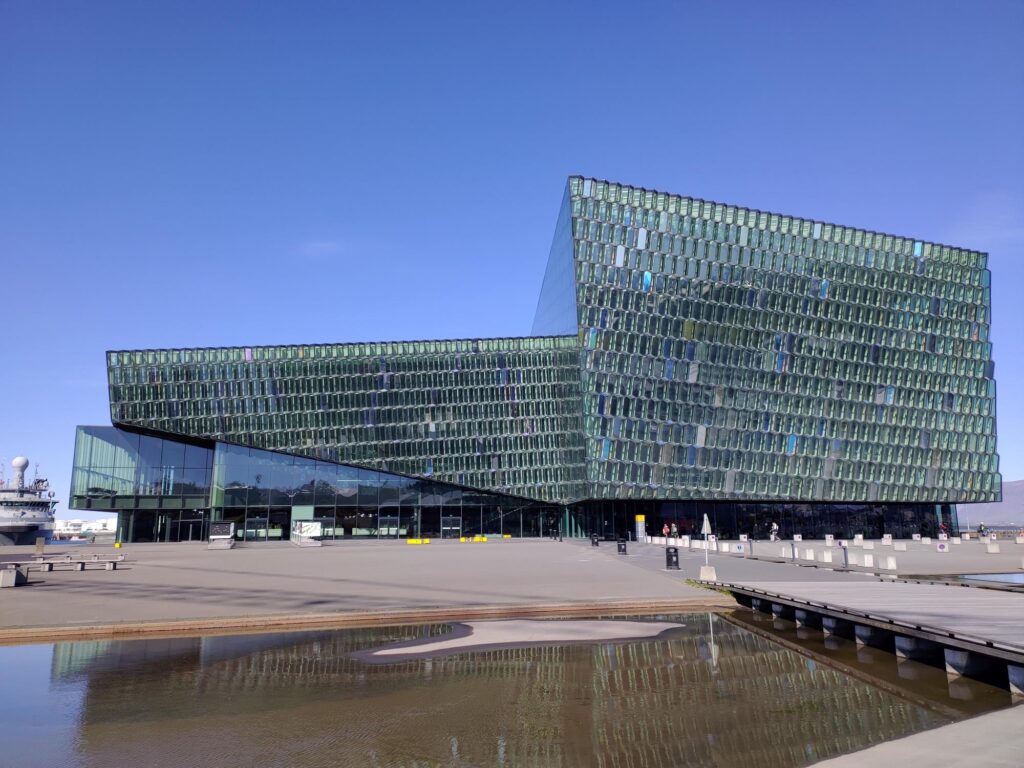
The old harbour — fishing boats, colourful warehouses, the Harpa concert hall with its geometric glass facade. The harbour in early morning before the tourist activity begins has a working-port quality that disappears by mid-morning.
City Photography
What Reykjavík offers on its own terms
The honest framing: Reykjavík rewards a half-day of serious attention approached on its own terms. It does not reward being treated as a failed landscape destination — or as a collection of Instagram coordinates. The city is interesting because people live there, not because tourists visit.
Street photography — Reykjavík’s small scale and walkable centre make it a reasonable street photography environment. The 101 district, Laugavegur street, the flea market at weekends — all offer the kind of everyday urban life that is genuinely different from what you find anywhere else in the city.
The Perlan viewpoint — the glass dome above the hot water tanks on Öskjuhlíð hill gives a panoramic view of the city and, on clear days, toward Snæfellsjökull glacier on the peninsula to the northwest. Worth visiting for the overview shot that establishes Reykjavík’s geography.
As a transit point, not a base
If your itinerary takes you from the south coast to the west, or from the airport toward the Snæfellsnes Peninsula, Reykjavík is a logical overnight stop rather than a detour. Use it as a waypoint — a place to rest, resupply, and move on — rather than as a hub from which to make day trips.
How to Leave Quickly
The practical point: Reykjavík to genuinely good photography locations requires commitment. A few distances from the city centre:
- Snæfellsnes Peninsula (Kirkjufell): 2.5 hours
- South coast (Reynisfjara, Vík): 2.5 hours
- Jökulsárlón: 4.5–5 hours
- Mývatn: 5–6 hours
- Westfjords (Ísafjörður): 6–7 hours
- East Iceland (Seyðisfjörður): 7–8 hours
None of these are day trips in any meaningful sense for a photographer who wants to be in position for sunrise and sunset. They are overnight destinations. Plan your trip as a circuit — arriving into Reykjavík, leaving immediately, returning only at the end — and you will photograph more Iceland and less car park.
A Practical First-Night Plan
Arrive at Keflavík, collect the rental car, drive directly toward your first destination. If fatigue or arrival time makes driving the full distance impractical, stop somewhere on the way — Selfoss, Hvolsvöllur, or Vík for the south coast direction — rather than staying in Reykjavík and losing a morning.
If you must stay the first night in the capital, use the evening for the harbour and Hallgrímskirkja, check the aurora forecast, and leave before 8am the next morning.
The city will still be there on the last night.
One winter caveat: if you land in darkness, fatigue and unfamiliar icy roads are a genuinely bad combination. I drive as far as possible on arrival day myself — but I have six trips and a lot of Iceland driving behind me, and I know what I am getting into. If this is your first Iceland trip, or conditions are poor, staying the first night near the airport and starting fresh at dawn is not a lost morning — it is the same risk judgement we apply everywhere else on this site. No photograph is worth your life, and no itinerary is either.
Leave No Trace — The Urban Version
Responsible photography doesn’t pause at the city limits. A few Reykjavík-specific points:
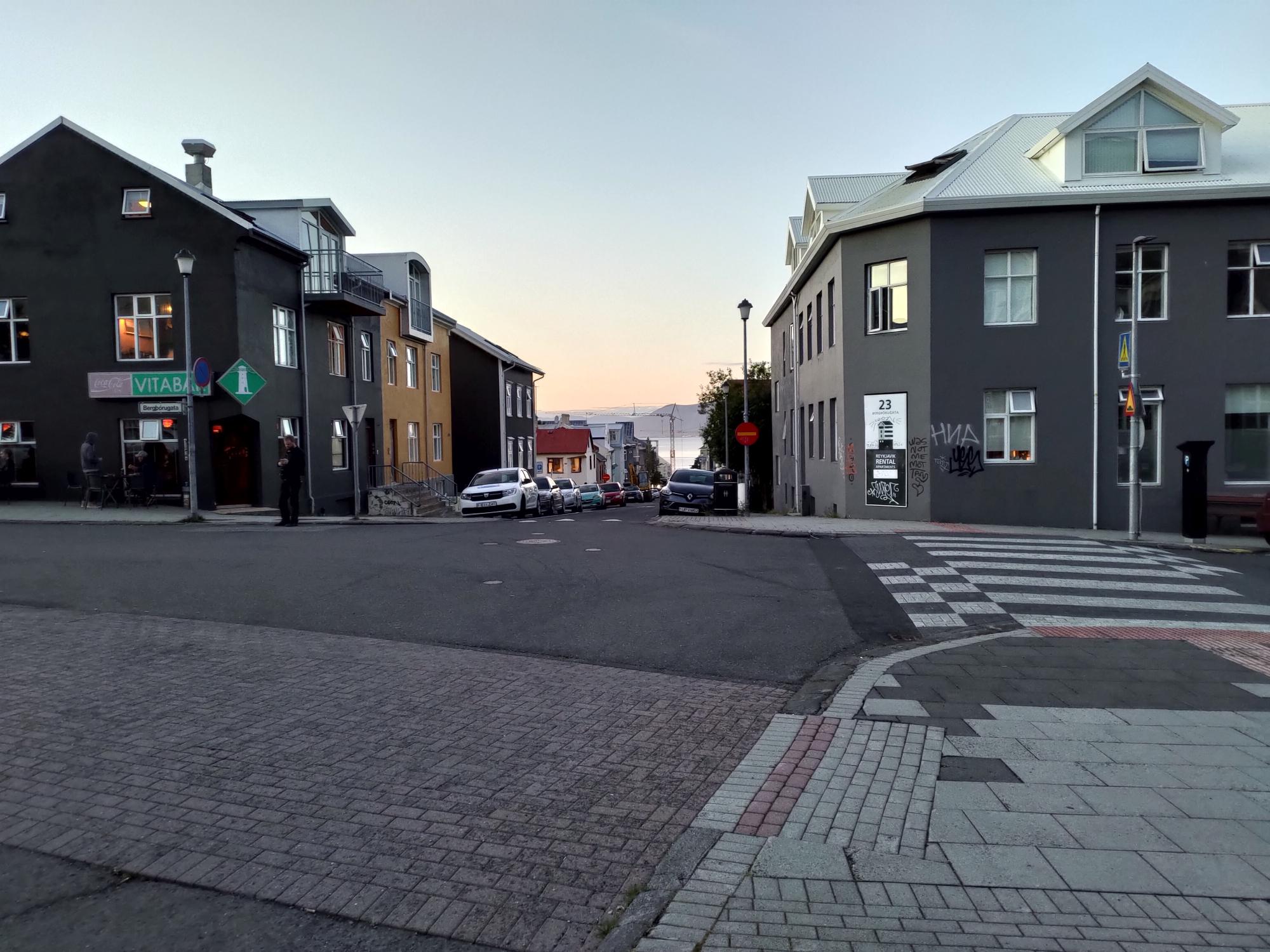
The residential streets of 101 are homes, not film sets. The colourful corrugated-iron houses are among the city’s most photographed subjects — and people live in them. Do not photograph into windows, block doorways for compositions, or treat private steps as shooting platforms.
Street photography involves people who did not ask to be in your frame. Iceland has strong privacy norms and GDPR applies. Photographing identifiable individuals for publication requires the same care you would want applied to yourself.
Drone flight over central Reykjavík is heavily restricted — the city sits within controlled airspace around the domestic airport, and flying over uninvolved people is prohibited under EU rules regardless. Check kort.gis.is/mapview/?app=dronar before even considering a launch. In practice: the drone stays packed in the capital.
Support the local version of the city. The bakeries, the pools, the harbour cafés — the Reykjavík worth photographing exists because people live there, not because tourists visit.
Alternative: The First Night Without the City
If your goal is simply to be near Keflavík for an early flight, Reykjavík is not the only option. The towns of Keflavík and Njarðvík sit directly beside the airport — unglamorous but practical.
I have also spent the final night in Grindavík to visit the Blue Lagoon before departure — if you want to have seen it once, crowds and all, the last evening is the pragmatic slot for it. The obvious caveat: the volcanic activity on the Reykjanes Peninsula in recent years has repeatedly affected both the town and the lagoon. Check the current status before building your last night around it.
For the first night heading out, the direction of your circuit decides the stop. Heading east along the south coast, Hveragerði or Selfoss put you 45 minutes ahead of everyone leaving the capital the next morning — I can recommend Selfoss from my own trips. Heading north — toward Snæfellsnes, the Westfjords, or driving the Ring Road counter-clockwise — Route 1 via Akranes is the equivalent move: Borgarnes makes a practical first stop and positions you for the west and north without ever entering the capital.
First & Last Night
Where to actually stay — by direction of travel
Winter first night caveat: if you land in darkness with fatigue and unfamiliar icy roads ahead, staying the first night near the airport is not a lost morning — it is the same risk judgement that applies everywhere else on this site. No itinerary is worth a winter road accident. Drive only as far as conditions and your own state allow.
And the Reykjanes Peninsula itself — often dismissed as a transit zone — offers genuinely underrated photography: the Krýsuvík geothermal area, the cliffs at Valahnúkamöl, and the bridge between continents, all within 30 minutes of the airport and almost always empty at sunrise.
Sources
Veðurstofa Íslands (Icelandic Meteorological Office) — vedur.is
Ferðamálastofa (Icelandic Tourist Board) — visiticeland.com