
The mountain that doesn’t always show itself
Vestrahorn is one of the most photographed mountains in Iceland. The dramatic peak rising behind a black sand beach, reflected in shallow tidal pools at low tide — the image is iconic, and for good reason. It is genuinely one of the most striking compositions Iceland offers.
It is also one of the most weather-dependent locations on the island.
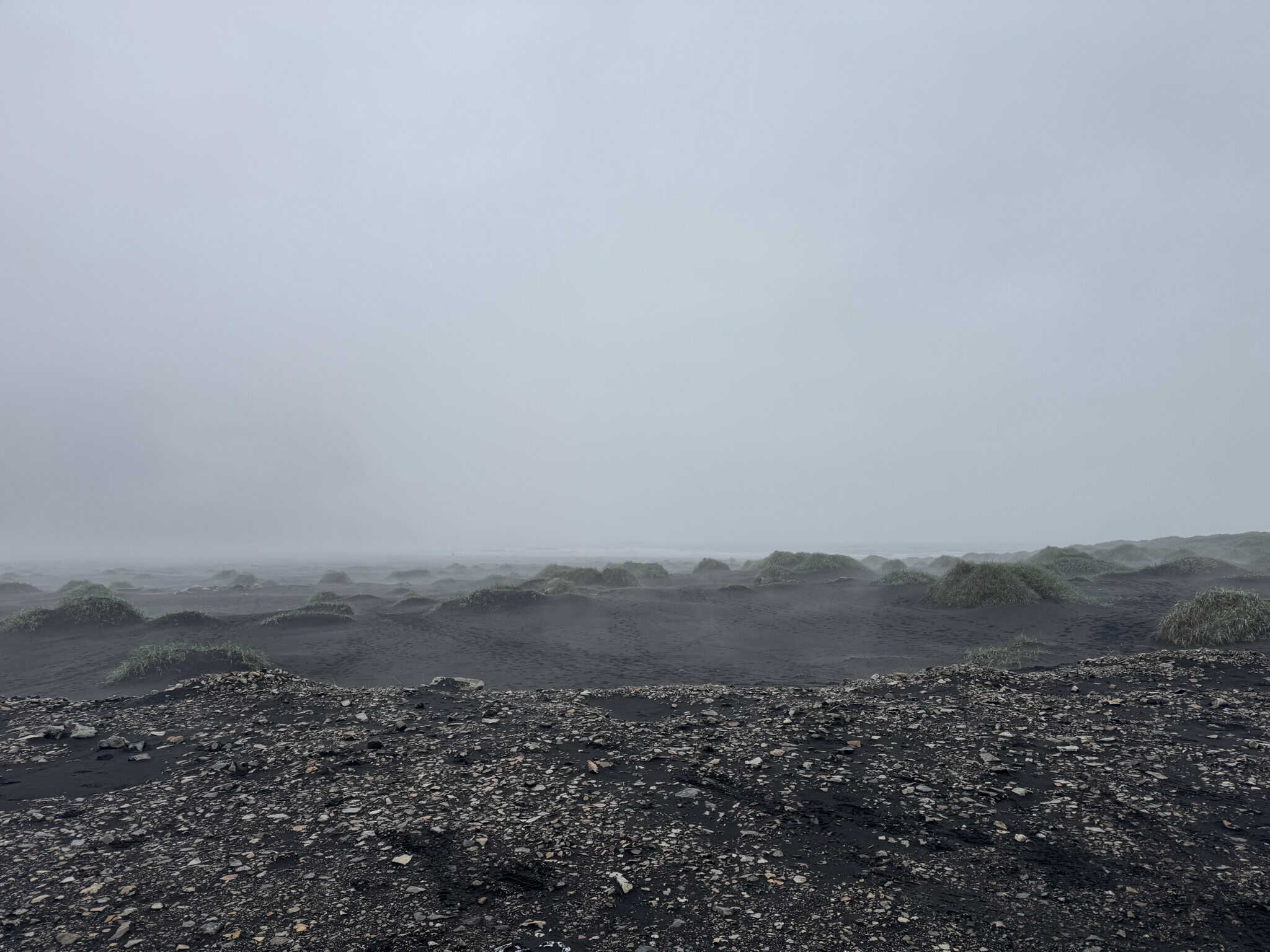
I visited Vestrahorn on a trip where the mountain was simply not there — not hidden by mist, but lost entirely behind rain and grey sky. We saw the beach, the farm, the lighthouse. We did not see the mountain. The staff at Stokksnes Farm — sometimes called “Batman Farm” by photographers, a nickname derived from the mountain’s silhouette which some liken to Batman’s cowl — were gracious enough to waive the entrance fee given the conditions. That was a kind gesture, not a policy. Do not count on it.
The locals told us something worth passing on: the weather at Vestrahorn has a tendency to “stick.” Cloud and rain can settle over the Stokksnes peninsula for days while the rest of the south coast is clear. It is a microclimate phenomenon that experienced Iceland photographers know to plan around.
This guide will tell you how to maximise your chances — and what to do if the mountain doesn’t cooperate.
This guide is one part of the complete guide to photographing Iceland responsibly — start there if you are planning a first trip.
Why Vestrahorn?
The photographic appeal is straightforward. Vestrahorn rises to 454 metres almost directly from the beach, with very little transition between the dramatic gabbro and granophyre rock face and the flat black sand below. At low tide, shallow pools of water form on the beach and create mirror-like reflections of the peak and sky. Combined with the right light — golden hour, dramatic cloud, or the blue hour before sunrise — the compositions available here are among the most dramatic in Iceland.
The mountain’s distinctive silhouette has made it a favourite subject for landscape photographers worldwide. Unlike many of Iceland’s famous locations, Vestrahorn is not easily replicated. The combination of peak, beach, and reflective pools is unique.
At a Glance
Vestrahorn — Key Facts for Photographers
Weather warning: Vestrahorn sits in its own microclimate. Cloud and rain can settle over Stokksnes for days while the rest of the south coast is clear. Build flexibility into your itinerary — this location does not reward a fixed schedule.
Access and Entrance Fee
Vestrahorn sits on the Stokksnes peninsula near the town of Höfn in southeast Iceland. Access to the beach and the prime shooting positions requires passing through Stokksnes Farm, where an entrance fee is charged. The fee goes directly to the farm and covers maintenance of the access track and surrounding land.
Key access information:
- The farm is located off Route 1, approximately 5 kilometres east of Höfn
- The entrance fee is payable at the farm — check current pricing on arrival as it changes
- The farm also operates a small café which is worth knowing about on a cold morning
- Access is generally possible year-round, weather and road conditions permitting
- The fee is non-negotiable and does not depend on weather conditions — what happened on my visit was a personal gesture, not standard practice
Best Time to Visit
Light and season
Planning
Three things have to align at Vestrahorn
The best light at Vestrahorn follows the same logic as most south-facing Icelandic locations — golden hour in the morning and evening, with the low-angle light of autumn and winter producing the most dramatic results. Summer’s midnight sun offers the unusual opportunity to shoot in warm light at 1am, though the crowds are at their peak.
Autumn is particularly recommended — September and October bring reduced visitor numbers, the possibility of Northern Lights after dark, and light that sits at a low angle for extended periods.
Tidal timing
This is the detail that separates a good Vestrahorn photograph from a great one. The reflective pools on the beach depend entirely on the tide. Low tide exposes the shallow pools that create the classic mirror reflection. High tide covers them.
Before your visit, check the tide tables for Höfn. Plan your shoot around low tide, ideally combined with golden hour or blue hour light. The two windows that align are rare and worth waiting for. Check the tidal range and plan around low water → Iceland Tide Calculator.
Weather — the honest version
Vestrahorn is one of Iceland’s most weather-exposed locations. The peninsula regularly sees winds exceeding 100 mph, heavy rain, and — as I experienced — low cloud cover that swallows the peaks entirely and makes photography impossible regardless of timing or preparation. When conditions align, the stormy drama produces powerful images. When they don’t, there is genuinely nothing to photograph. Build flexibility into your itinerary. This is not a location that rewards a fixed schedule.
If you are driving the Ring Road with a fixed schedule, Vestrahorn is a high-risk stop. If you can afford to stay in Höfn for two nights and wait for a window — the odds improve considerably. Always check Veðurstofa Íslands the evening before and again in the morning.
A dramatic cloudy sky is not necessarily a failed shot. Moody, overcast light at Vestrahorn can produce powerful images — the mountain doesn’t need blue sky to be impressive. But you do need to see the mountain.
Photographic Tips
Composition: The classic shot positions the mountain centrally with the reflective pools in the foreground. Don’t stop there — experiment with the black sand dunes to the west, which add texture and lead the eye toward the peak. The beach stretches considerably, and different positions along it produce very different relationships between foreground and mountain.
Focal length: A wide angle (16–24mm) works well for the classic beach and reflection composition. A short telephoto (70–100mm) compresses the scene and can isolate the peak dramatically against a layered sky.
Settings for reflections: Use a small aperture (f/11–f/16) for maximum depth of field when including the reflective pools. A polarising filter reduces glare and increases the saturation of the reflection — remove it if you want the sky’s colours to appear in the water.
Long exposure: The black sand and incoming tide lend themselves to long exposure work. A 10-stop ND filter can turn the incoming water into smooth motion while keeping the mountain sharp. Bring a sturdy tripod — wind on the Stokksnes peninsula is consistent and often strong.
Aurora: Vestrahorn is an excellent Northern Lights location in autumn and winter. The mountain provides a dramatic foreground, and the area has low light pollution. Check the aurora forecast on Veðurstofa Íslands and plan accordingly.
Viking Village
On the access track to Vestrahorn sits an unexpected landmark — a collection of turf-roofed Viking-age style structures built as a film set and never demolished. It has appeared in various productions and is now something of a curiosity in its own right.
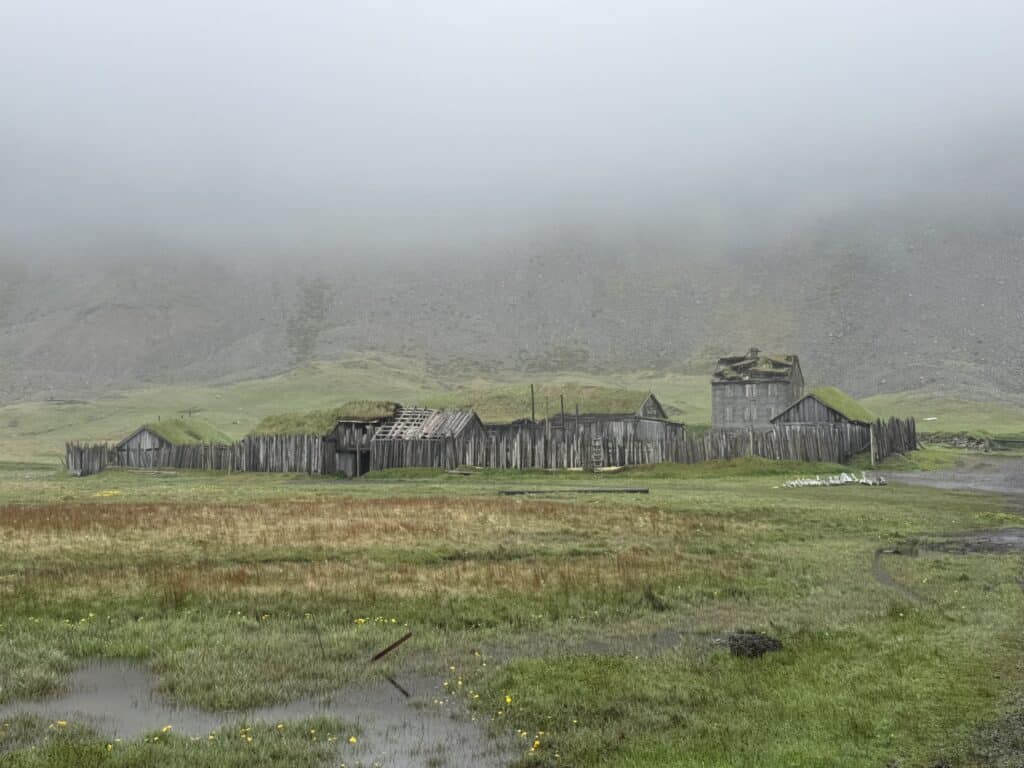
Photographically, the Viking Village offers an interesting foreground element, particularly in moody or overcast conditions where the weathered wood and turf roofs sit naturally against the grey sky. It is worth a walk-through while you’re on site — and on the kind of grey day when Vestrahorn itself isn’t cooperating, it gives you something to photograph.
Leave No Trace
Vestrahorn is a working farm as well as a photography location. The usual principles apply with a few location-specific additions:
Leave No Trace — Stokksnes
Location-specific rules for Vestrahorn
Full Leave No Trace principles for Iceland: A Photographer’s Guide →
Stay on the beach and marked access areas. The land surrounding the beach is private farmland. Do not wander beyond the areas clearly open to visitors.
No driving on the beach. The black sand is not a road. Tyre tracks cause lasting damage and are visible long after the vehicle has gone.
Respect the tidal zones. The pools that create the famous reflections are fragile ecosystems. Do not walk through them when they can be walked around.
Wind and waves. The beach at Stokksnes faces the open North Atlantic. Waves can be larger and faster than they appear from a distance. Do not position yourself between an ice block or large object and the incoming tide — waves arrive without warning. Maintain a safe distance from the waterline at all times.
Take nothing. The black sand stays on the beach. No rocks, no shells, no fragments of driftwood.
If the Weather Doesn’t Cooperate
Vestrahorn in the rain is a genuine possibility — as I know from personal experience. If the mountain is not visible, consider the following:
- Wait. Iceland’s weather changes fast. A two-hour coffee stop in Höfn has salvaged many shoots.
- Shoot what is there. The beach, the Viking Village, the incoming waves — grey light is not always wasted light.
- Come back. If your itinerary allows a return visit, the mountain rewards patience.
And if none of the above works — the next section offers an alternative that most Vestrahorn visitors never consider.
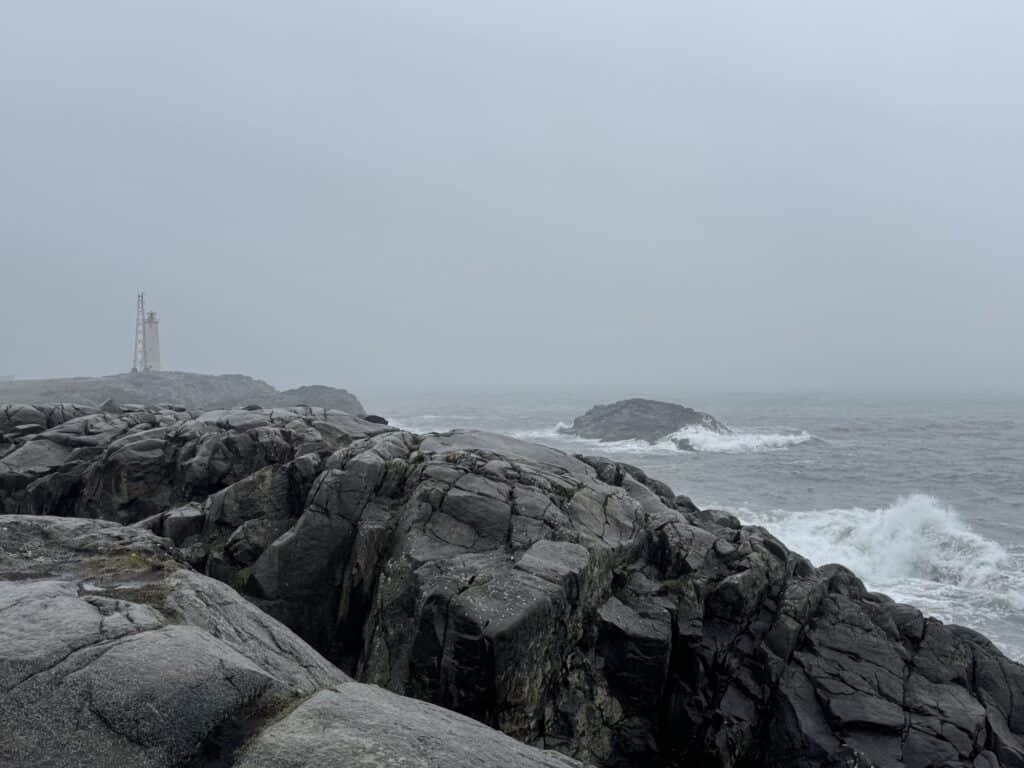
A personal note on the entrance fee: before my second trip to Iceland I came across reviews describing the fee as too expensive and the visit not worth the money. I took that advice — and drove past Vestrahorn on two subsequent trips without stopping. It was only on my most recent visit that I finally made the detour. The weather was against us and the mountain stayed hidden — but the mistake wasn’t going. The mistake was letting a review written by someone with no apparent interest in photography shape the decision for four years. A location guide written for general tourists tells you nothing about its value as a photography location. Judge it by your own criteria.
Alternative: Eystrahorn
Jökulsárlón glacier lagoon sits an hour’s drive east — the two locations together make a natural southeast Iceland photography circuit. Full guide: Jökulsárlón & Diamond Beach Photography Guide.
Thirty kilometres east of Vestrahorn, largely overlooked by the photography community, sits Eystrahorn — a similarly dramatic peak with a fraction of the visitors. The mountain rises steeply from the coastline along Route 1 and offers compositions that are, in some conditions, equally striking.
Eystrahorn requires no entrance fee and no detour off the main road. It lacks the reflective beach pools that make Vestrahorn famous, but it more than compensates with accessibility and solitude. On a day when Vestrahorn’s microclimate is misbehaving, Eystrahorn — just thirty kilometres along the coast — may be sitting in entirely different conditions.
It is the kind of location this site exists to highlight.
Getting There
- From Reykjavík: Approximately 5–6 hours via Route 1. Not a day trip — plan an overnight stay in Höfn.
- From the east: Höfn is approximately 2 hours from Egilsstaðir via Route 1.
- Road conditions: Route 1 is paved and generally accessible year-round, though winter driving requires a 4WD vehicle and careful weather monitoring. Check road.is before every drive.
- Nearest accommodation: Höfn, approximately 5 kilometres west of Stokksnes Farm.
Sources
- Veðurstofa Íslands (Icelandic Meteorological Office) — vedur.is
- Umhverfisstofnun (Environment Agency of Iceland) — ust.is
- Vegagerðin (Icelandic Road Administration) — road.is
- Ferðamálastofa (Icelandic Tourist Board) — visiticeland.com