There is no wrong season — but there is a right one for what you want to capture
Most travel guides will tell you to visit Iceland in summer. The midnight sun is real, the roads are open, and the weather is as forgiving as Iceland gets. For general tourism, the logic holds.
For photography, the answer is more complicated — and far more interesting.
Every season in Iceland offers something the others cannot. The question is not which season is best, but which season is best for you — for the subjects you want to photograph, the conditions you’re prepared for, and the kind of experience you’re looking for. This guide gives you an honest, photographer-specific breakdown of all four.
Photographer’s Planner
What to shoot — month by month
| Month | Aurora | Midnight Sun | Puffins | Ice Caves | F-Roads | Crowds | Best for |
|---|---|---|---|---|---|---|---|
| Jan Winter |
✓✓✓ |
— |
— |
✓✓✓ |
— |
Low |
Peak aurora, ice caves at their best. Extreme conditions — prepare seriously. |
| Feb Winter |
✓✓✓ |
— |
— |
✓✓✓ |
— |
Low |
Daylight returning. Often the best month for aurora + snow landscapes combined. |
| Mar Winter |
✓✓ |
— |
— |
✓✓ |
— |
Low |
Ice caves still open. Snowpack at maximum depth. Conditions easier than Jan–Feb. |
| Apr Spring |
✓ |
— |
✓ |
— |
— |
Low |
Unpredictable. Waterfalls at peak flow. First puffins arrive late April. |
| May Spring |
— |
✓ |
✓✓ |
— |
~ |
Med |
F-roads starting to open. Vivid green emerging. Puffins building colonies. |
| Jun Summer |
— |
✓✓✓ |
✓✓✓ |
— |
Open |
High |
Midnight sun. All roads open. Shoot at 2am for empty locations and golden light. |
| Jul Summer |
— |
✓✓✓ |
✓✓✓ |
— |
Open |
Peak |
Peak crowds. Puffins at maximum numbers. Plan for early mornings. |
| Aug Summer |
✓ |
✓✓ |
✓✓ |
— |
Open |
High |
Aurora returns late August. Crowds begin to thin. A good shoulder compromise. |
| Sep Autumn |
✓✓ |
— |
— |
— |
~ |
Low |
Autumn colours, aurora, low crowds. F-roads closing progressively. Strong recommendation. |
| Oct Autumn |
✓✓ |
— |
— |
— |
— |
Low |
Peak autumn colour. Large icebergs at Diamond Beach. Golden hour light returns. |
| Nov Autumn |
✓✓ |
— |
— |
— |
— |
Low |
Transitioning to winter. Increasingly dramatic weather. First snow at lower elevations. |
| Dec Winter |
✓✓✓ |
— |
— |
✓✓ |
— |
Low |
Shortest days of the year — 4–5 hrs daylight. Ice caves opening. Plan meticulously. |
F-road status varies by route and year — always verify at road.is before travel.
Autumn — September to November
The season I keep coming back to
If I had to recommend one season to a photographer visiting Iceland for the first time, it would be autumn — specifically September and October.
The reasoning is personal as much as practical. The tourist numbers drop noticeably after the summer peak. The landscape shifts — greens give way to amber, rust, and ochre, and those warm tones sit beautifully against Iceland’s black rock and grey skies. The golden hour stretches in a way that summer, paradoxically, doesn’t offer — the midnight sun means flat, directionless light for weeks, while autumn brings low-angle warmth that photographers chase.
And the Northern Lights return.
Autumn is also when Vestrahorn is at its best: low crowds, low-angle light all day and the first aurora nights of the season.
From late August onwards, the nights are dark enough for aurora activity. September and October hit a particular sweet spot — darkness without the extreme cold of deep winter, with the added photographic bonus of autumn colour in the foreground.
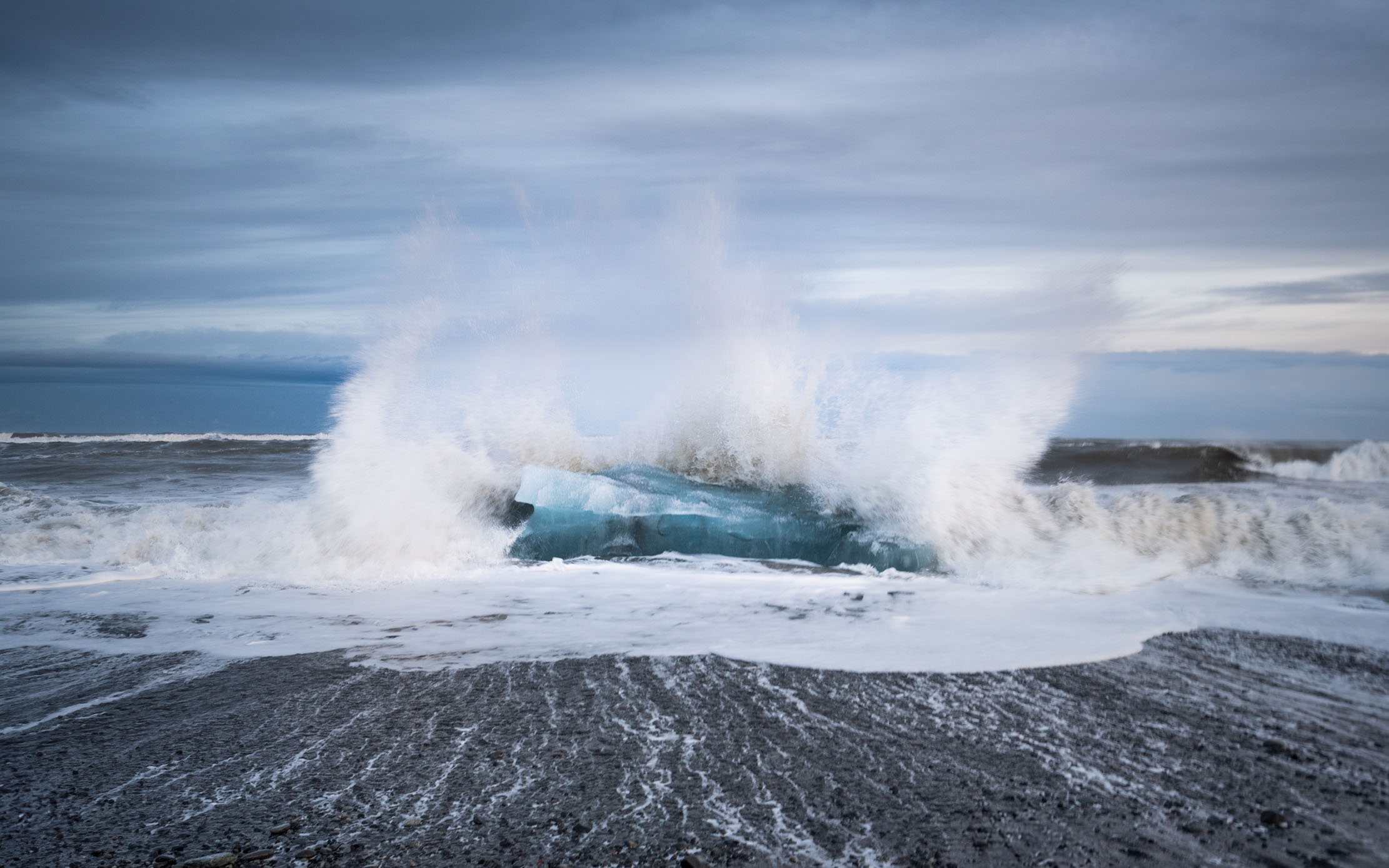
One detail from my own trips that I haven’t seen mentioned often enough: the icebergs at Diamond Beach. Jökulsárlón glacier lagoon calves ice year-round, but in autumn I have encountered some of the largest pieces I have ever seen on the black sand — enormous, sculptural blocks of glacial ice meeting the Atlantic surf. The combination of scale, texture, and light at that beach in autumn is unlike anything I have experienced at any other time of year.
What autumn offers:
- Northern Lights from late August onwards
- Autumn colours — warm tones across the landscape
- Dramatically reduced crowds compared to summer
- Long golden hours and low-angle light
- Large icebergs at Diamond Beach (Jökulsárlón)
- Milder conditions than winter — less snow at lower elevations, more accessible roads
- Most F-roads closing progressively through end of September – F-road opening and closing dates vary by route and by year — always check current status at road.is before planning any highland route.
What to prepare for:
- Rapidly changing weather — wind, rain, and sunshine can follow each other within hours
- Shorter daylight by November — plan shoots carefully
- Some highland roads closing from October onwards
Autumn — September to November
What to bring & what to expect
Marcel’s pick: September–October is the season he returns to most. Aurora, autumn colour, and Diamond Beach icebergs at their largest — with a fraction of the summer crowds.
Winter — December to February
Extreme conditions, extraordinary results
Winter in Iceland is demanding. Daylight can shrink to four or five hours. Temperatures drop well below zero. Wind chill on exposed coastlines and highland plateaus is serious. Roads close, conditions shift without warning, and the margin for error is smaller than in any other season.
It is also, photographically, the most dramatic time of year.
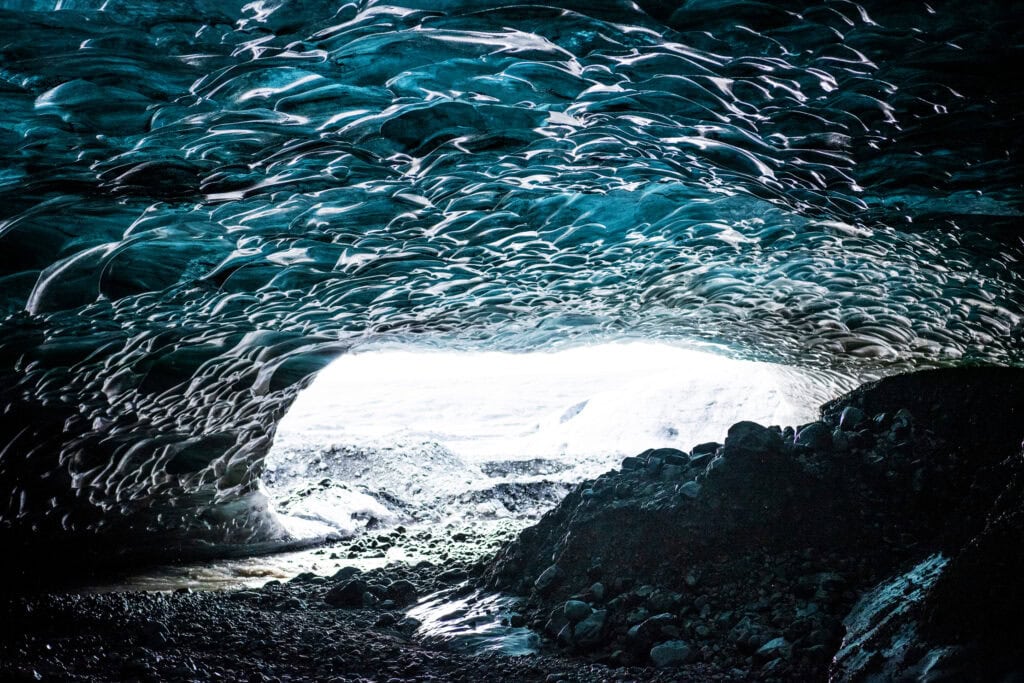
For me, winter means March — the tail end of the season when conditions are still genuinely wintry but the daylight is beginning to return. The snowpack in the highlands and at higher elevations is at its deepest, and the ice caves beneath Vatnajökull glacier are still fully formed and accessible. I have photographed inside those caves and the experience is difficult to describe — blue glacial ice lit from within, absolute silence, a geological timescale made visible. The caves are only safely accessible in winter, guided, and through authorised operators. They are worth planning an entire trip around.
Winter is also peak aurora season. Long nights, low light pollution outside Reykjavík, and statistically higher aurora activity combine to give serious Northern Lights photographers their best odds. I have seen the aurora in autumn, but the winter displays — when conditions align — are on a different scale entirely.
The snowfall transforms Iceland’s already dramatic landscape into something even more otherworldly. Lava fields under deep snow, frozen waterfalls, ice-covered roads through mountain passes — winter Iceland requires preparation, but it rewards it.
What winter offers:
- Ice caves in Vatnajökull — only accessible in winter
- Peak Northern Lights season
- Snow and ice transforming the landscape
- Minimal crowds
- Concentrated, beautiful daylight — short but intense
- Long blue hours before and after sunrise
What to prepare for:
- Extreme cold — dress in proper layers, not just a warm jacket
- Very short daylight windows — plan every shooting day meticulously
- 4WD vehicle is essential, studded tyres strongly recommended
- Many F-roads and highland routes completely closed
- Weather can turn severe quickly — monitor Veðurstofa Íslands daily
- Ice caves require a licensed guide — never attempt solo access
A note on safety: Iceland’s winter landscape is not a backdrop. It is a genuinely hazardous environment. Cold, wind, and reduced visibility can escalate fast. Always inform someone of your plans, carry emergency equipment, and do not underestimate conditions. No photograph is worth your life.
Winter — December to February
What to bring & what to expect
Safety note: Iceland’s winter is not a backdrop — it is a genuinely hazardous environment. Always inform someone of your plans, carry emergency equipment, and never underestimate cold and wind. No photograph is worth your life.
Spring — March to May
High reward, high variability
Spring is Iceland’s most unpredictable season — and for photographers comfortable with uncertainty, that unpredictability can work in your favour.
Snow and ice persist at lower elevations well into April, sometimes May. I have experienced this directly, and not always pleasantly — a field that looked solid on the surface concealed a deep hole that I broke straight through, dislocating my shoulder in the process. Spring conditions in Iceland deserve the same respect as full winter.
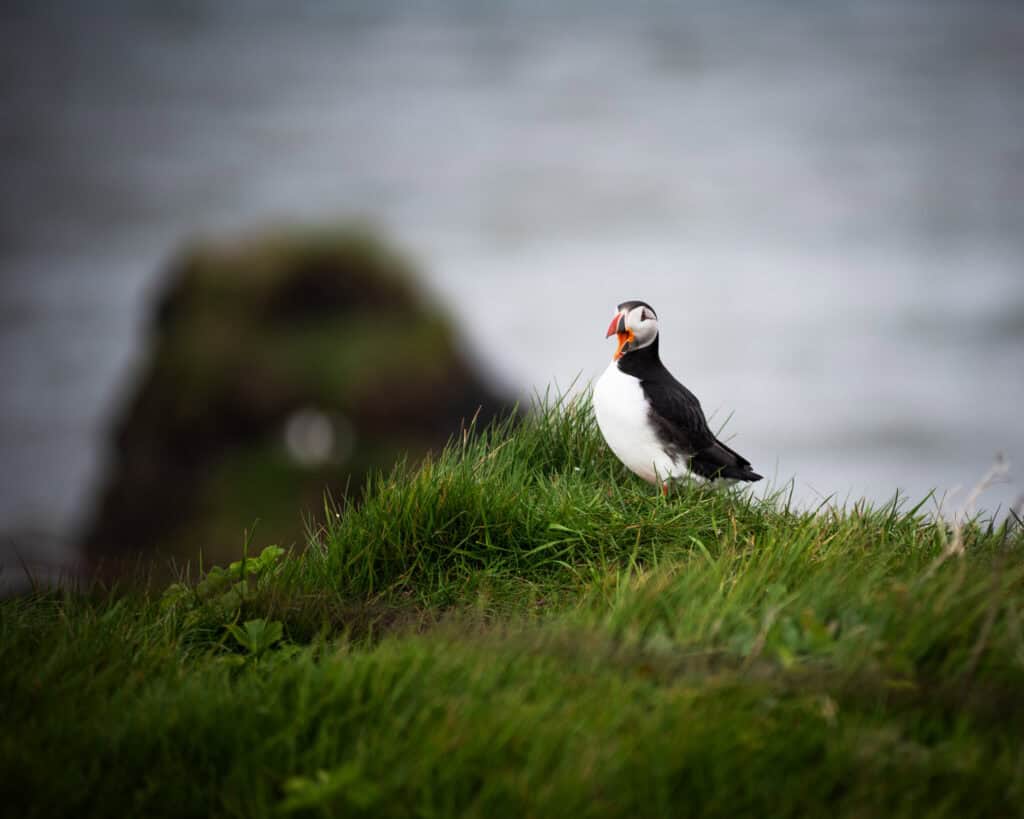
That said, spring brings its own rewards. The F-roads begin to open from late May (F-road opening and closing dates vary by route and by year — always check current status at road.is before planning any highland route.), giving access to highland locations that have been closed since October. Waterfalls are at maximum flow as snowmelt swells the rivers. The birdlife returns — puffins arrive on Icelandic shores from late April, and the coastal cliffs come alive with activity.
The light improves steadily through the season. By May, golden hours are long and the landscape is shifting from monochrome winter white to the vivid green of new growth.
What spring offers:
- F-road access returning from late May (F-road opening and closing dates vary by route and by year — always check current status at road.is before planning any highland route.)
- Waterfalls at peak flow
- Puffins arriving from late April
- Northern Lights still possible in March and early April
- Fewer tourists than summer
What to prepare for:
- Highly variable conditions — snow, ice, wind, and sunshine in the same day
- Deceptive snow coverage — what looks solid may not be
- Some roads and locations still closed or restricted
- Mud and soft ground at lower elevations as snow melts
Spring — March to May
What to bring & what to expect
The upside: Spring is the quietest season few photographers target. Low crowds, dramatic waterfalls, and the landscape shifting from winter white to vivid green — often in the same frame.
Summer — June to August
Midnight sun and maximum crowds
Summer is Iceland’s peak tourist season, and for understandable reasons. The roads are open, the weather is at its most manageable, and the midnight sun is a genuine phenomenon — twenty-four hours of light, with the sun barely dipping below the horizon before rising again.
For photography, the midnight sun creates opportunities that simply don’t exist at other latitudes. Photographing at 2am in warm, low-angle light, with no one else around — that experience is real and worth seeking out. The key is adjusting your schedule: sleep during the day, shoot at night.
The trade-off is significant. Summer brings Iceland’s largest visitor numbers. The famous locations — Reynisfjara, Seljalandsfoss, Jökulsárlón — are busy through most of the day. Compositions that look clean and dramatic in winter photographs are harder to achieve when shared with a hundred other visitors. And with continuous daylight, there is no aurora.
Summer is also the best season for puffins — the colonies are at maximum size through June and July, and accessible locations like Látrabjarg in the Westfjords offer extraordinary wildlife photography in a genuinely remote setting.
What summer offers:
- Midnight sun — 24-hour shooting windows
- All F-roads and highland routes open
- Puffins at peak numbers — June and July
- Maximum accessibility for all locations
- Warmest and most stable weather
What to prepare for:
- Maximum crowds at popular locations — plan early morning or late evening shoots
- No Northern Lights — nights are not dark enough
- Accommodation and car rental at peak prices — book far in advance
- Flat, directionless light during the middle of the day
Summer — June to August
What to bring & what to expect
The honest trade-off: Summer gives you access to everything — but the most photogenic Iceland is rarely the busiest one. If crowds bother your compositions, consider August instead: the light is returning, and visitor numbers are already dropping.
Quick Comparison
| Autumn | Winter | Spring | Summer | |
|---|---|---|---|---|
| Northern Lights | ✓✓ | ✓✓✓ | ✓ | ✗ |
| Midnight Sun | ✗ | ✗ | ✗ | ✓✓✓ |
| Crowds | Low | Very low | Low | High |
| Ice Caves | ✗ | ✓✓✓ | ✗ | ✗ |
| Puffins | ✗ | ✗ | ✓ | ✓✓✓ |
| F-Road Access | Closing progressively | ✗ | Reopening – conditions dependent | ✓✓✓ |
| Autumn Colours | ✓✓✓ | ✗ | ✗ | ✗ |
| Difficulty | Moderate | High | Moderate–High | Low |
My Recommendation
If you are visiting Iceland for the first time and want the broadest photographic experience with manageable conditions — go in September or October. You will find the Northern Lights, the autumn light, quieter locations, and an Iceland that feels closer to what it actually is than the summer version most visitors see.
If you are an experienced photographer willing to prepare seriously — go in winter. The ice caves, the aurora, and the snow-covered landscape offer images that no other season can match.
Whatever season you choose, the same principles apply: check the forecast, respect the landscape, and give yourself more time than you think you need. Iceland rarely delivers on a tight schedule — but it almost always delivers.
Further Reading
- Photography in Iceland: The Complete Responsible Guide — Pillar article
- Leave No Trace in Iceland: A Photographer’s Guide
- How to Photograph the Northern Lights in Iceland
- Iceland in Winter for Photographers: October to March
- Iceland F-Roads for Photographers: Access, Safety & Seasons
Sources
- Veðurstofa Íslands (Icelandic Meteorological Office) — vedur.is
- Umhverfisstofnun (Environment Agency of Iceland) — ust.is
- Ferðamálastofa (Icelandic Tourist Board) — visiticeland.com
- Vatnajökull National Park — vjp.is