
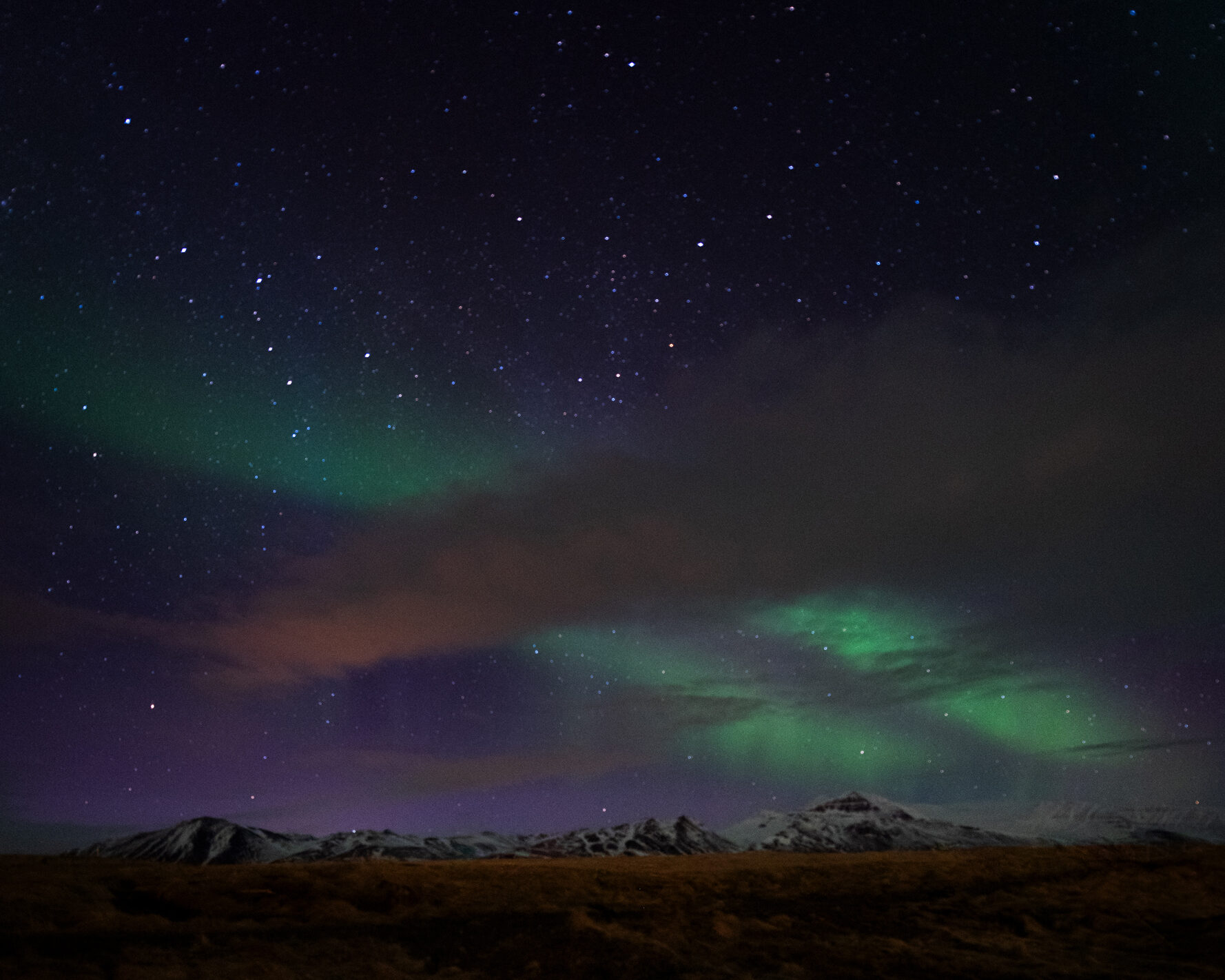
Cold causes three problems on an aurora night, and each has a simple fix. The battery drains: carry at least two per body and keep the spare close to your body. The lens fogs or frosts: keep the front element warm with a hand warmer or dew heater strap and never wipe frost off the glass. The camera sweats indoors: seal it in a plastic bag before you walk into a warm room and leave it there until it has reached room temperature.
Why aurora nights are hard on gear
Aurora photography combines everything that is bad for a camera in the cold: you stand still for hours, the shutter is open for seconds per frame, the screen is lit, and the temperature at night is lower than during the day. Standing in an Icelandic field at midnight is far colder than driving there, and fingers that cannot operate the controls end the shoot. The Northern Lights guide covers settings, forecasting and clothing, this guide covers what the cold does to the camera.
Batteries
Cold slows the chemical reactions in a lithium-ion battery, and the battery delivers less power. The Camera Gear guide gives the practical effect: a battery that shows 80 percent in a warm room can drop to 20 percent within an hour of shooting in the cold. Canon’s Digital Learning Center gives the same basic advice: keep spare batteries inside your clothing, as close to your body as possible.
- Carry at least two fully charged batteries per body and keep the spare in an inner jacket pocket. A hand warmer next to the battery adds a second layer of insurance on the coldest days.
- Swap before it dies, not after. When the camera shows a low level or shuts down, put in the warm battery. The cold one often recovers part of its charge once it has warmed up in your pocket, so rotate them.
- Save power. Switch off the image review on the screen and do not leave Wi-Fi or Bluetooth on.
- Charge everything the night before and check the memory cards. Running out of storage during a strong display is avoidable.
Fogging and frost on the lens
A lens can fog or frost in two ways. Warm, moist air from your breath or from a warm room condenses on the cold glass. And on a clear night the front element can cool below the temperature of the surrounding air, so moisture settles on it even without any warm source nearby. Aurora nights are, almost by definition, clear nights.
- Use the lens hood. It reduces how much the front element cools towards the sky.
- Keep the glass warm. A hand warmer held against the lens barrel with a rubber band or a dew heater strap keeps the front element above the dew point. Keep the warmer away from the glass itself.
- Keep your breath away from the lens, and do not change lenses outside in wind or snow. Change them in the car or in your bag before you walk out.
- Check the front element every few sequences. A fogged lens produces a soft, hazy aurora that you only notice at home.
- Do not wipe frost. Frost on the glass scratches when wiped. Warm the lens gently, for example with a hand warmer next to the barrel, and let the frost melt.
Condensation when you come back inside
The camera is the problem when you go back into the warm. Warm, humid air meets a cold camera and condenses on and inside it. The official advice from the manufacturers is simple. Sony’s support pages say to place the camera in a plastic bag and seal it tightly before moving from one temperature extreme to another, and to open the bag only when the air temperature inside it has reached the surrounding temperature. One Sony manual puts that at about an hour.
- Put the camera, lenses and spare batteries into a zip bag while you are still outside, so that the air inside the bag is cold and dry.
- Leave everything sealed in the bag after you come in, ideally in the coldest corner of the room.
- The same applies when you get into a heated car: pack the camera before the door opens, not after.
- Remove memory cards and batteries only after the camera has warmed up.
Hands, tripod and controls
- Wear a thin liner glove under a warm outer glove so that you can press buttons without bare skin on cold metal.
- Use a remote release or the 2-second timer for every shot, as the Northern Lights guide recommends. It also keeps your hands off the camera.
- Expect the screen to be slow and dim in the cold. Set your focus and your exposure at the start, and check the results at 100 percent only when you have a warm moment.
- Hand warmers in your pockets help. Fingers that cannot operate the controls end the shoot.
Cold and safety
The cold is a bigger risk for you than for the camera. Dress in layers with an insulated waterproof shell, tell someone your plan, carry a charged phone, and know that the emergency number in Iceland is 112. All of this is in the checklist of the Northern Lights guide, along with the rules for night shooting in the Leave No Trace guide.
Checklist
| When | What |
|---|---|
| Before you leave | All batteries charged (at least two per body), cards formatted, hand warmers, zip bags, lens cloth, dew heater strap or rubber bands, lens hood on |
| On location | Spare battery in an inner pocket, camera sealed in a bag only if you go into a warm car, check the front element every few sequences, screen review off |
| Coming back inside | Camera, lenses and batteries into a zip bag before the door, leave sealed for about an hour, charge batteries only when they are warm |
Frequently asked questions
How long does a camera battery last when photographing the northern lights in the cold?
Much shorter than at home. Cold slows the chemical reactions in the battery, and a battery that shows 80 percent in a warm room can drop to 20 percent within an hour of shooting outside. Carry at least two fully charged batteries per camera body and keep the spare one in an inner pocket.
How do I stop my lens from fogging up when photographing the aurora?
Keep the front element from cooling below the surrounding air: use a lens hood, wrap a hand warmer or a dew heater strap around the lens barrel, and keep your breath away from the glass. If the lens fogs anyway, warm it gently instead of wiping it.
Can I bring my camera into a warm room straight after a night in the cold?
Not directly. Sony’s support pages advise to seal the camera in a plastic bag before moving between temperature extremes, and to open the bag only when the air inside has reached the surrounding temperature, which can take about an hour.
Does the cold damage a camera?
Cold mainly drains the battery and slows the screen. Many manufacturers state an operating range that starts at about 0 degrees Celsius, so check your manual. The bigger risk is condensation when the cold camera meets warm, humid air, not the cold itself.
What should I do if the battery dies during a display?
Swap in the warm spare from your inner pocket and put the cold one in the pocket. A battery that dies in the cold often recovers part of its charge once it has warmed up, so you can use it again later in the night.
Sources
Sony — Help Guide, On moisture condensation
Canon Digital Learning Center, reported by The Digital Picture — cold-weather battery advice
Shooticeland — Camera Gear for Iceland and How to Photograph the Northern Lights in Iceland
Last verified: October 2026.