
The place that reveals itself slowly
I visited Seyðisfjörður in 2020 as part of a longer trip through Iceland. At the time I did not fully grasp what we had found. It was only looking back — reviewing the images, thinking about the drive down through the mountain pass, the scale of the fjord, the silence — that I understood we had been somewhere genuinely special.
That delayed recognition is itself telling. Seyðisfjörður does not announce itself. It sits at the end of a winding road at the back of a fjord in East Iceland, far from the south coast circuit that most visitors follow, and it asks for a certain kind of attention that hurried travel does not always make possible.
For photographers willing to make the detour, it rewards that attention fully.
At a Glance
Seyðisfjörður — Key Facts for Photographers
Marcel’s experience: Visited in 2020. The delayed recognition — understanding only later what made the place special — is itself telling. Seyðisfjörður rewards the kind of attention that hurried travel doesn’t allow. Stay overnight if you can.
Getting There — The Drive Is Part of the Experience
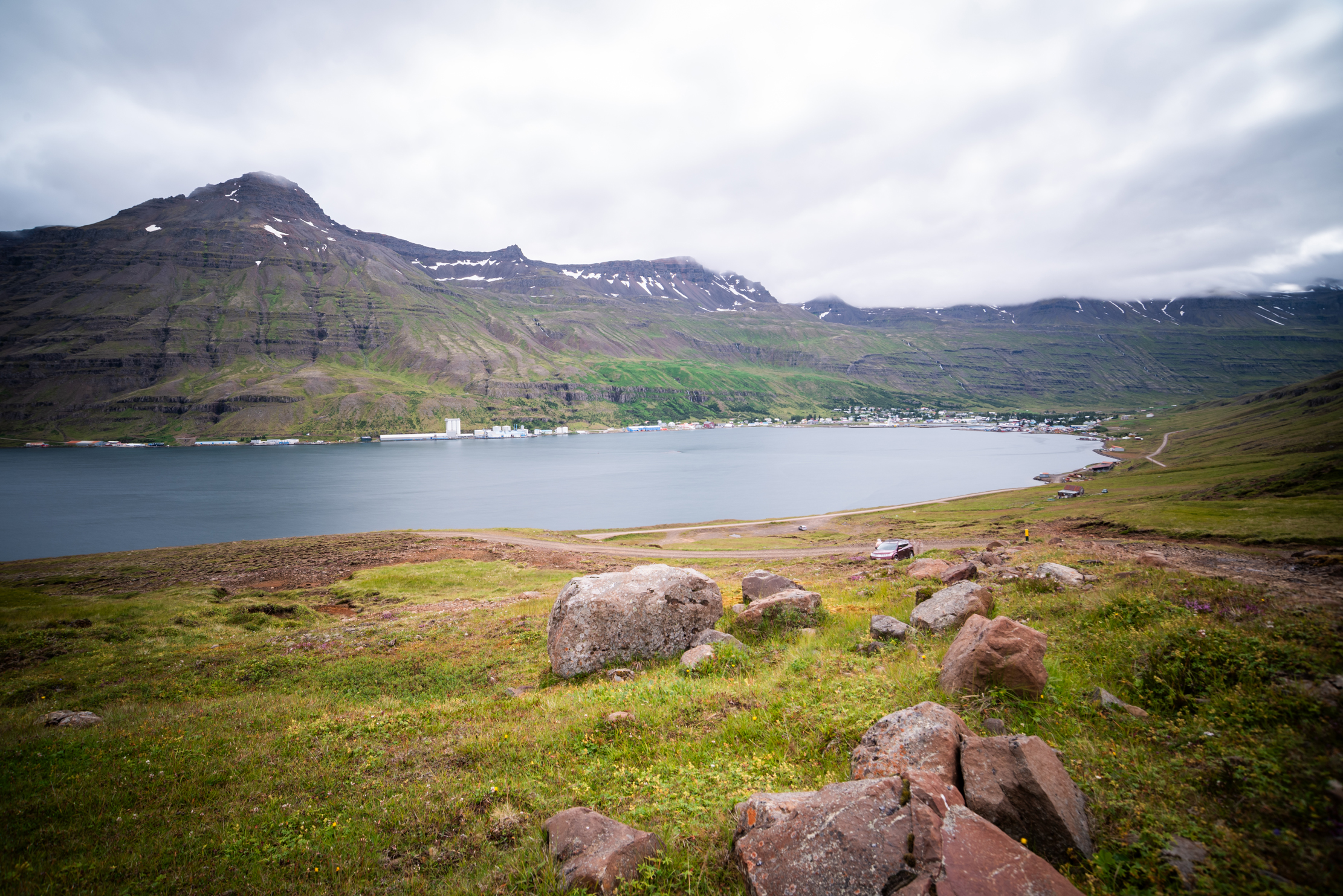
Seyðisfjörður is reached via Route 93 from Egilsstaðir — a road that climbs steeply through a mountain pass before descending into the fjord valley. The ascent and descent are part of the photographic experience: the moment the fjord comes into view below, with the town visible at the water’s edge and the mountains rising on both sides, is one of those Iceland moments that photographs cannot fully prepare you for.
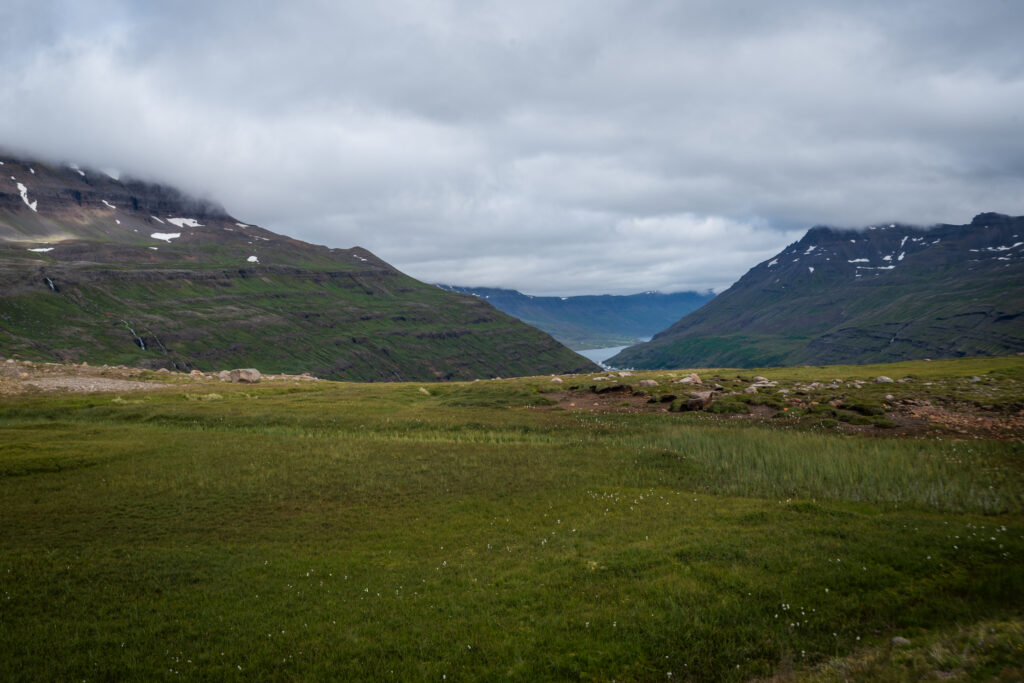
The drive takes approximately 30 minutes from Egilsstaðir. In winter and early spring, the mountain pass can close due to snow or avalanche risk — check road.is before travelling. The pass has a known avalanche history and is taken seriously by local authorities.
From the Ring Road: Egilsstaðir sits directly on Route 1 in East Iceland, approximately 700 kilometres from Reykjavík. Seyðisfjörður is 27 kilometres further east on Route 93.
Why Seyðisfjörður
The town’s photographic appeal comes from the combination of its setting and its character. The fjord stretches several kilometres inland, flanked by steep mountains that catch the evening light from the west and the morning light from the east. The Iceland Light Calculator shows exact golden hour and blue hour times for Seyðisfjörður — the fjord orientation means light quality changes dramatically depending on the time of day. Waterfalls cascade down the mountainsides above the town — visible from the streets below, accessible by short walks above.
The town itself is small, colourful, and architecturally distinctive — wooden buildings painted in bright colours that reflect the Norwegian influence brought by fishing industry workers in the late nineteenth century. The most photographed element is the rainbow-painted street leading to the Tvísöngur sound sculpture and the blue church — a composition that has become widely known but which, in person, fits naturally into the wider landscape rather than feeling like a staged attraction.
What makes Seyðisfjörður different from Iceland’s better-known locations is the absence of the infrastructure that comes with mass tourism. There is no large car park, no visitor centre, no roped-off viewpoints. The town functions as a town — which means that the photography here feels embedded in a living place rather than extracted from a designated attraction.
A Note on Cruise Ships and the Smyril Line Ferry
This is worth stating directly, because it affects when and how you visit.
Planning Your Visit
When to visit — and when to avoid
Crowd level by season
The simple rule: Seyðisfjörður on a day without a ship arrival is a quiet, intimate town at the end of a fjord. On a day with one, it is something different. The ship leaves and the town returns to itself — usually within a few hours. If your schedule allows, arrive the day before and stay until after the ship has gone.
Seyðisfjörður is a port town. The Smyril Line ferry — which connects the Faroe Islands and Denmark with Iceland — docks here on a weekly schedule. When it arrives, passenger numbers in the town increase substantially. Cruise ships also call at Seyðisfjörður during the summer season.
On these days, the quiet that defines the town’s photographic appeal is temporarily replaced by something quite different. A small town with a few hundred permanent residents absorbing several hundred or several thousand visitors at once changes the character of the place entirely. I find it genuinely difficult to reconcile the intimacy of Seyðisfjörður’s streets and fjord with the scale of a large cruise ship moored at the dock. The contrast is striking, and not in a way that serves the town or the experience.
The practical advice: check the Smyril Line schedule before you visit and plan around ferry arrival days if solitude matters to you. For cruise ship schedules, the Egilsstaðir tourist information office can advise on expected arrivals during your travel dates.
The town returns to itself quickly once the ships leave.
Photography Locations
Four subjects — what each one offers and when to shoot it
The approach that works: Arrive the evening before a ferry-free day. Shoot the fjord on the way down. Morning at the rainbow street. Afternoon at the waterfalls. Evening back at the fjord or shoreline. That is a full day — and it uses Seyðisfjörður as the unhurried place it actually is.
Key Photographic Locations
The Fjord from Above
The approach road from the mountain pass gives the most dramatic overview of Seyðisfjörður — the full fjord visible, the town at the far end, the mountains on both sides, the water reflecting whatever the sky is doing. This is not a location you need to walk to — it is visible from the road on the descent. Pull over where it is safe to do so and take the time to work the composition from multiple positions along the hillside.
Evening light from the west catches the fjord surface directly. In overcast conditions the diffuse light reduces contrast and allows the full tonal range of the scene — dark water, green hillside, grey rock — to work together without the harsh shadows that direct sunlight produces.
The Rainbow Street and Blue Church
The rainbow-painted road leads from the town centre toward the blue Tvísöngur sound sculpture on the hillside above — with the church of Seyðisfjörður (Seyðisfjarðarkirkja) as the anchor of the composition. The church was built in 1922 and is one of Iceland’s most photographed wooden churches.
The composition works best from the street level with a moderate wide angle (24–35mm) — wide enough to include the full painted road receding toward the church, but not so wide that the church becomes small and the painted lines dominate. Morning light from the east catches the church front directly. Overcast light reduces the distraction of strong shadows across the painted road surface.
The rainbow street is most vibrant in summer when the colours have been freshly maintained. By late autumn some sections fade. Check current condition locally if the colours are important to your composition.
Waterfalls Above the Town
Several waterfalls descend from the mountains above Seyðisfjörður and are visible and accessible from the town. The most prominent drops directly behind the town and can be reached by a short walk from the streets below.
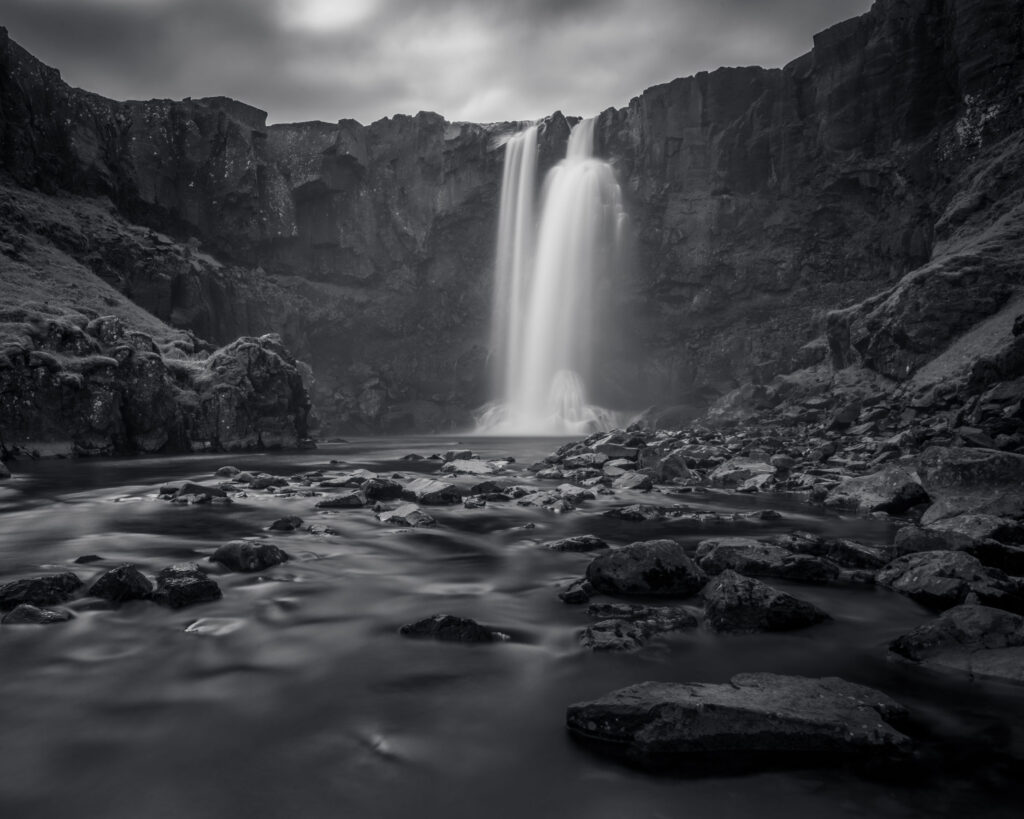
These falls reward a telephoto lens from the town streets — the compression brings the waterfall into relationship with the buildings and the fjord below in a way that a wide angle from closer cannot achieve. A 100–200mm focal length from the eastern edge of the town works particularly well in the evening when the light falls across the cliff face from the west.
The Fjord Shore
The shoreline of the fjord within the town offers quieter compositions — the water, the mountains reflected in it on calm days, the boats at the small harbour. Early morning before the town wakes gives the cleanest conditions. Long exposure work on the water surface requires a stable surface and calm wind — the fjord is sheltered enough that conditions are often manageable.
When to Visit
Summer (June–August): Maximum light, including the midnight sun from late May through July. The town is at its most colourful. The Smyril Line ferry runs its full schedule and cruise ships are most frequent — check arrival days carefully.
Autumn (September–October): The season I would recommend. The visitor numbers drop after August, the autumn light is warm and low, and the ferry schedule reduces. The mountain pass is still reliably open. The combination of autumn colour on the hillsides and the fjord’s scale in October light is extraordinary.
Winter (November–March): The mountain pass can close. When it is open, winter Seyðisfjörður is almost entirely tourist-free. The town’s wooden buildings against snow-covered mountains, the fjord in winter light — the photographic potential is significant, but the access uncertainty requires flexibility in your schedule.
Drone Use
Seyðisfjörður is not within a national park. General EU drone regulations apply — register at flydrone.is, follow standard altitude and proximity rules, and do not fly over people or the ferry when it is in port. The fjord and the mountain approach offer extraordinary aerial perspectives. Check kort.gis.is/mapview/?app=dronar for any local restrictions before flying.
Leave No Trace
Seyðisfjörður is a functioning town, not a museum. The colourful buildings that make it photogenic are people’s homes and workplaces. Do not enter private properties uninvited — a photogenic facade does not make a building publicly accessible. This sounds obvious, but the line between admiring a town’s architecture and intruding on private life has been crossed at picturesque Icelandic villages often enough that it is worth stating directly.
Do not photograph private homes or residents without consideration. The colourful buildings that make the town photogenic are people’s homes. The line between appreciating the town’s architecture and intruding on private life is worth being conscious of.
Respect the fjord shore. The shoreline below the town is not a designated photography area — it is a working waterfront. Behave accordingly.
Take nothing. The stones on the fjord shore, the wildflowers on the hillside above — they stay where they are.
Alternative: Borgarfjörður Eystri
Approximately 70 kilometres north of Seyðisfjörður on Route 94, Borgarfjörður Eystri is a smaller and even less visited village with one of Iceland’s best puffin viewing platforms and extraordinary mountain scenery. The drive from Seyðisfjörður takes approximately 90 minutes on a largely unpaved road. The two can be combined into a two-day East Iceland itinerary that covers some of the region’s best photography with almost no other visitors.
Sources
- Vegagerðin (Icelandic Road Administration) — road.is
- Ferðamálastofa (Icelandic Tourist Board) — visiticeland.com
- Veðurstofa Íslands (Icelandic Meteorological Office) — vedur.is