
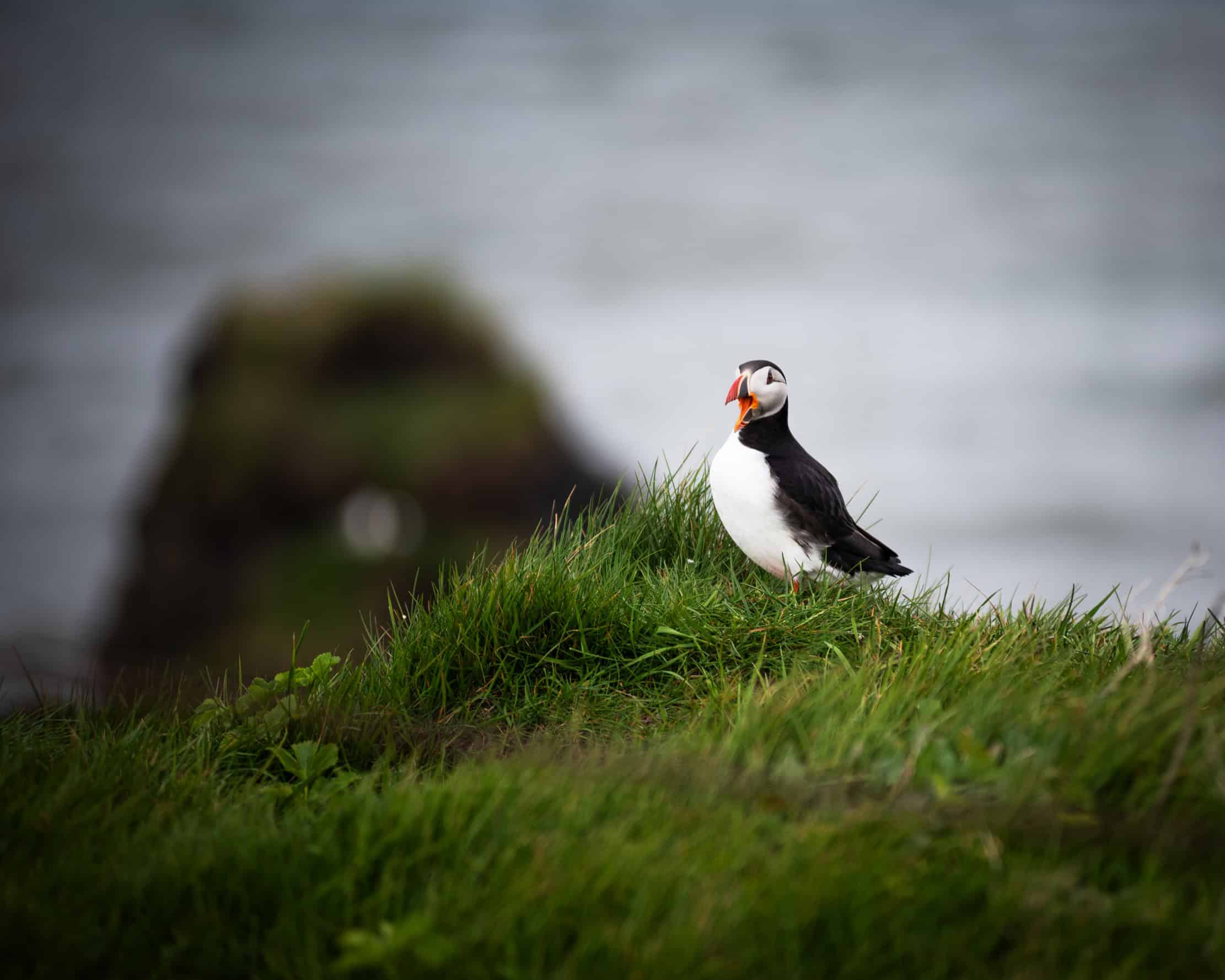
The bird that makes itself available — if you let it come to you
Puffins are not shy. That is both their charm and the source of the problem.
An Atlantic puffin on its nesting cliff will often allow a human to approach closer than almost any other wild bird — not because it is tame, but because it is focused. During nesting season, the imperative to feed chicks and defend a burrow overrides the instinct to flee. Photographers exploit this. Some exploit it responsibly. Many do not.
I have seen puffins at Látrabjarg in the Westfjords — arriving in October to find the birds already gone for the season, the cliffs quiet. I photographed them years ago at Reynisdrangar without a telephoto lens, close enough to see the detail in that extraordinary beak but unable to capture it properly. And I have sat at the cliffs near Reynisfjara at Arnardrangur and watched a group of puffins circle overhead in wide, relaxed arcs — until one landed directly opposite us on the clifftop grass, settled, and gave us all the time in the world.
We had not moved toward it. We had waited. That is the lesson this article is built around.
This guide is one part of the complete guide to photographing Iceland responsibly — start there if you are planning a first trip.
When Puffins Are in Iceland
Atlantic puffins arrive on Iceland’s coasts from late April, with colonies reaching full size by mid-May. The peak season runs from May through mid-August, with June and July being the most reliable months for photography — the birds are actively feeding chicks, making frequent fishing trips, and present at the burrows throughout the day.
By late August the birds begin returning to sea. A few remain into early September but numbers drop quickly. By mid-September most colonies are empty.
October visits to puffin locations will find no puffins. This is worth stating clearly — I arrived at Látrabjarg in mid-October to empty cliffs. The location is still worth visiting for the scenery and the other seabirds that remain, but the puffins are gone.
Location Guide
Iceland’s five best puffin locations compared
Marcel’s recommendation: Borgarfjörður Eystri for the best photography setup; Arnardrangur for accessibility from the south coast; Látrabjarg for the most wild and remote experience. All three reward patience over pursuit.
Where to Find Them
Látrabjarg — Westfjords
Europe’s largest seabird cliff and Iceland’s most famous puffin location. The birds nest in burrows along the clifftop path in extraordinary numbers — in peak season, stepping carefully along the path puts you within metres of active burrows. A 70-200mm lens is more than sufficient. The remoteness of the location means the birds are less habituated to crowds than at more accessible spots, and the experience feels genuinely wild.
Access requires a full day from Ísafjörður or a long drive from the south. The last 46 kilometres of road are unpaved — a 4WD vehicle is strongly recommended. Season: May through August.
Borgarfjörður Eystri — East Iceland
The lesser-known alternative that serious puffin photographers rate as highly as Látrabjarg — sometimes higher. A dedicated viewing platform has been built directly above an active colony, allowing close observation without any disturbance to nesting areas. The platform design is one of the best wildlife photography setups in Iceland: elevated, stable, and positioned so that the birds treat it as part of the landscape.
Borgarfjörður Eystri is a long drive from the south coast but rewards the effort. The village itself is small and quiet, with accommodation available in season. Season: May through August.
Arnardrangur — Near Reynisfjara, South Iceland
Less publicised than the major colonies but genuinely productive — and considerably more accessible from the south coast. The basalt sea stacks near Reynisfjara attract puffins that circle the cliffs and land on the clifftop grass at close range.
My best puffin images came from here. We arrived to enjoy the view and found the birds already in the air, circling in wide arcs above the cliffs. We sat down, kept still, and waited. A puffin landed directly opposite us on a grass ledge, settled, and remained there long enough for everything we needed. No pursuit, no approach — just patience and the right distance.
Season: May through August. Best approached from the Reynisfjara car park.
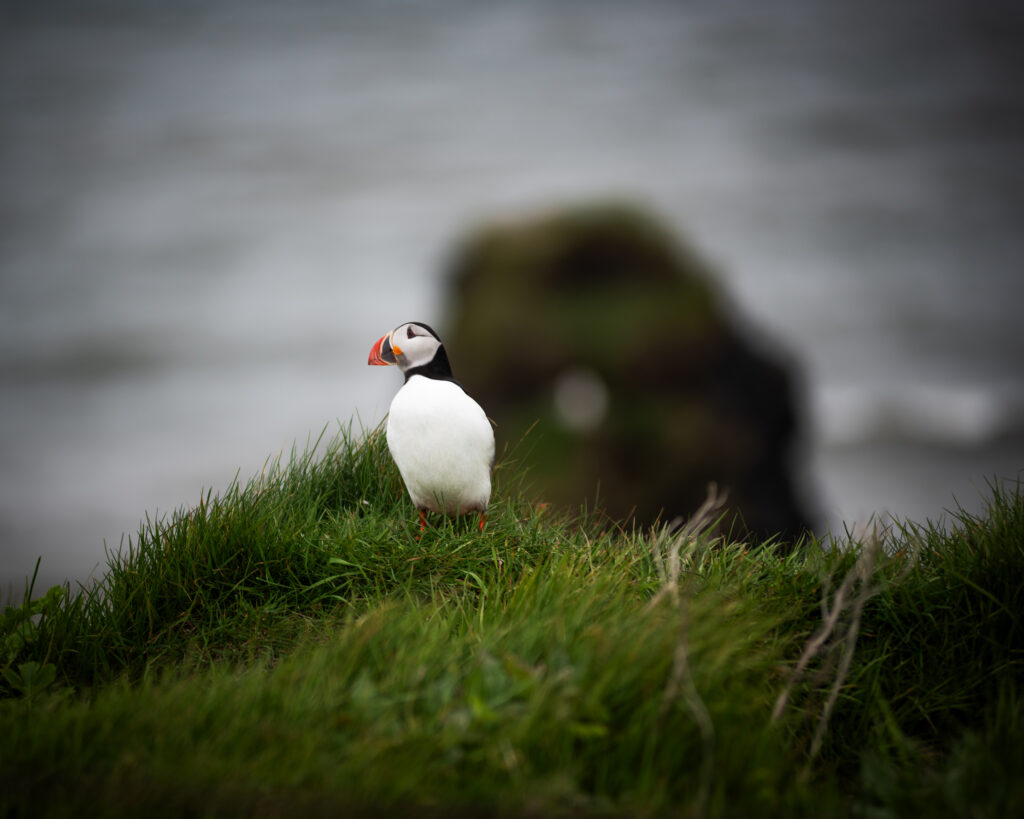
Vestmannaeyjar — Westman Islands
The largest puffin colony in Iceland — some estimates put the population at several million birds. The Westman Islands are accessible by ferry from Landeyjahöfn on the south coast and offer puffin photography at extraordinary scale. The islands also have strong photographic interest beyond the birds — the volcanic landscape, the harbour, and the dramatic coastline all reward time spent there.
Ferry schedules and accommodation should be booked well in advance in peak season. Season: May through August.
Reynisdrangar — Near Vík
The famous basalt sea stacks at Vík attract puffins that nest in the cliff faces. The location is one of Iceland’s most visited, which means significant crowds at the car park and beach. Early morning visits — before the tour buses arrive — give you quieter conditions and better light.
I first saw puffins here years ago without a telephoto lens. The birds were close enough to observe clearly but not to photograph properly. A 200mm minimum is recommended for frame-filling shots from the clifftop viewpoints. Season: May through August. Note: access to the upper viewing area near the lighthouse is restricted during nesting season to protect breeding birds — check current conditions locally.
Important update (2026): Reynisfjara has undergone dramatic changes following storms and a major landslide in February 2026. The shoreline has been significantly reduced by erosion, the Hálsanefshellir cave is currently cut off by the sea, and access to parts of the beach is actively managed through safety zones. The basalt columns near the waterline are no longer safely reachable in most conditions. The upper viewing platform near the lighthouse is already restricted during puffin nesting season — combined with the current beach situation, viewing puffins at Reynisdrangar is significantly more difficult than in previous years. Check current conditions locally before visiting and always follow on-site safety instructions. The Reynisdrangar sea stacks themselves remain intact and visible from the beach.
Photographic Tips
Camera Settings
Puffin photography — settings for every situation
The shot most people miss: the puffin returning from a fishing trip — bill full of sand eels, wings spread for landing. Position yourself with a clear sightline to an active burrow and wait. June and July, the return trips are frequent enough to fill a memory card.
Lens choice
A telephoto lens is not just a convenience for puffin photography — it is an ethical requirement. The correct distance from any wild bird is whatever distance produces no behavioural change. At locations like Látrabjarg, the birds may allow very close approach without apparent distress. That does not mean the approach is harmless.
Recommended: 200–400mm for most situations. At Borgarfjörður Eystri’s viewing platform and at Arnardrangur, a 70-200mm can be sufficient due to the natural proximity of the birds.
For a full Iceland gear guide including telephoto recommendations and cold-weather protection: Camera Gear for Iceland.
Timing within the day
Puffins are most active at the burrow in the early morning and evening. Midday sees many birds out at sea fishing — the cliffs can appear quiet even in peak season. Plan shoots for the first two hours after sunrise and the last two hours before sunset.
The evening light in June and July, combined with Iceland’s extended golden hour, produces the warmest and most flattering conditions for puffin portraits.
Approach and behaviour
- Sit down. A seated human reads as less threatening than a standing one. At locations where the birds are close, sitting on the path and waiting consistently produces better results than moving toward the subject.
- Move slowly. Fast movements trigger flight responses even in habituated birds.
- Watch the bird, not just the viewfinder. If a puffin looks up, shifts its weight, or orients away from you, you are too close. Back up.
- Never position yourself between a bird and its burrow entrance. Blocking access to the nest causes genuine distress and can lead to chick abandonment.
- Stay on the path. The clifftop vegetation conceals burrow entrances. Every step off the path risks collapsing a burrow roof onto eggs or chicks below.
Settings
Puffins in flight require fast shutter speeds — 1/1600s or faster to freeze wingbeats. In overcast conditions, push ISO to maintain shutter speed rather than allowing motion blur. Aperture priority with exposure compensation works well for birds on the ground; switch to shutter priority for flight shots.
A continuous autofocus mode with subject tracking handles the erratic flight pattern well on most modern camera bodies.
The shot most people miss
Everyone photographs the puffin standing on the cliff. The more interesting image is the puffin returning from a fishing trip — bill full of sand eels, wings spread for landing, expression somewhere between determination and comedy. Position yourself with a clear sightline to an active burrow entrance and wait. The return trips are frequent in June and July.
Leave No Trace — Puffin-Specific
Responsible Photography
How to behave around puffins — the rules that protect the bird
Reading the bird — acceptable distance vs. too close
The universal principle: any behavioural change in the animal means you are too close. A telephoto lens exists precisely so that this distance can be maintained without sacrificing the image.
Burrows are invisible from above
Iceland’s puffins nest in burrows excavated into clifftop turf. The entrance is often invisible from a standing position, and the tunnel extends horizontally for up to a metre. A single footstep in the wrong place collapses the roof onto the nest below.
At locations without marked paths — or where the path is unclear — step only on bare rock. If you cannot find bare rock, do not proceed.
No flash photography
Drone flights near puffin colonies during nesting season are prohibited and can cause mass nest abandonment. Full drone regulations: Drone Photography in Iceland.
Flash at close range causes genuine distress to nesting birds and has been associated with nest abandonment. Iceland’s long summer days mean there is no photographic justification for flash in daylight conditions. In low light, raise ISO.
Respect the season
The nesting season — May through August — is precisely when puffins are most accessible and most vulnerable. The chick inside the burrow depends entirely on the adult’s ability to feed it without disturbance. Every unnecessary approach, every flushed bird, every blocked burrow entrance has a direct consequence.
The wildlife watching principle
Any behavioural change in the animal means you are too close. This is the universal principle for wildlife photography and it applies absolutely here. A puffin that continues grooming, resting, or entering and exiting the burrow without acknowledging your presence is at an acceptable distance. A puffin that looks up, calls, or moves away is not.
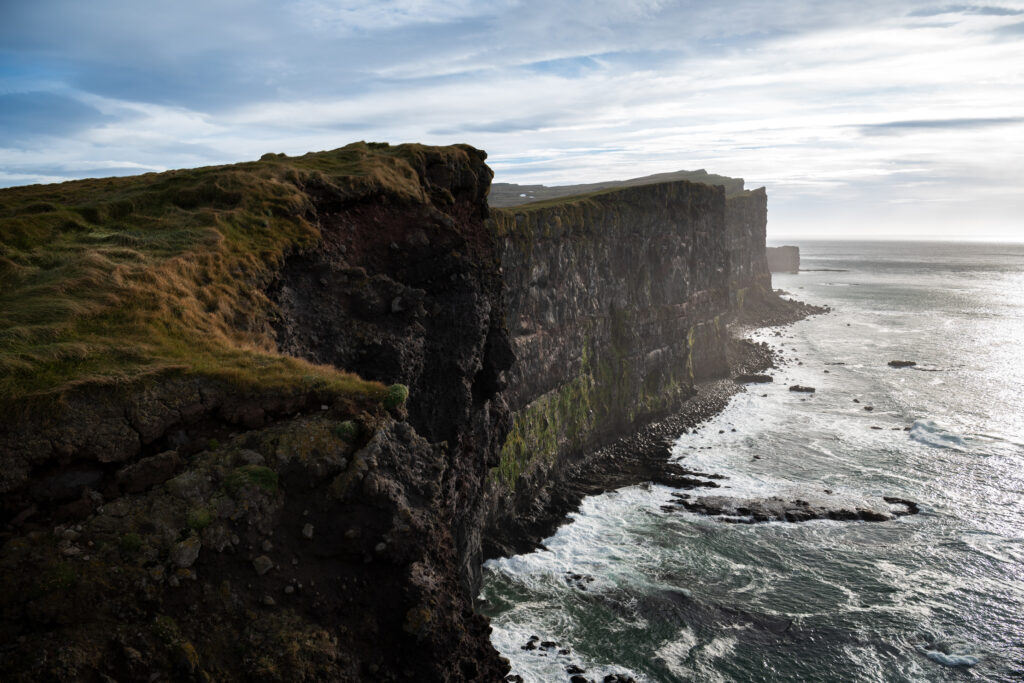
What to Do When the Season Is Over
Arriving in October to find empty puffin cliffs is a specific kind of disappointment. A few things worth knowing:
- Látrabjarg and the other major cliffs remain spectacular locations for seascape and landscape photography after the puffins leave
- Razorbills, guillemots, and fulmars remain on some cliffs into autumn
- The autumn and winter light at clifftop locations like Látrabjarg is extraordinary — the location does not require the birds to be worth the visit
- Plan the puffin photography for a dedicated summer trip; combine it with the other subjects summer Iceland offers
Further Reading
- Photographing the Westfjords: Iceland’s Forgotten Region — includes Látrabjarg in detail
- Leave No Trace in Iceland: A Photographer’s Guide
- Best Time to Visit Iceland for Photography
Sources
- Umhverfisstofnun (Environment Agency of Iceland) — ust.is
- Ferðamálastofa (Icelandic Tourist Board) — visiticeland.com