Iceland rewards photographers who prepare — and respect what they find
Iceland is one of the most photographed landscapes on earth. Glaciers, volcanoes, black sand beaches, the Northern Lights — the images are everywhere, and they draw photographers from around the world for good reason. The light here does things you simply don’t see anywhere else.
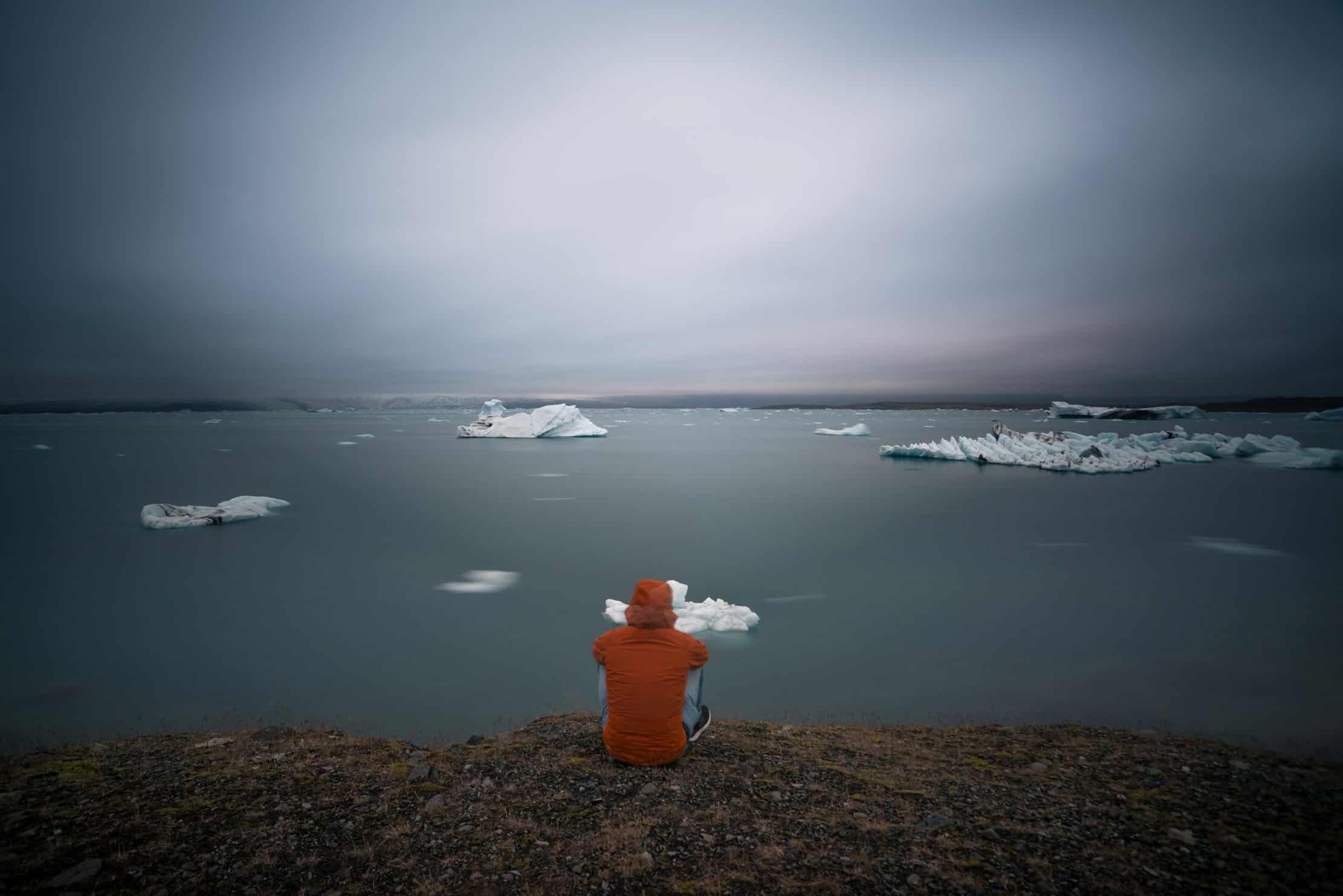
But Iceland is also under pressure. Visitor numbers have grown faster than the infrastructure and regulations designed to protect the landscape. Lava moss that takes centuries to grow gets trampled in a single season. Nesting birds are disturbed for a closer shot. Ropes and barriers are stepped over because the angle is slightly better on the other side.
This guide is written for photographers who want to do it differently — who want to come home with images they’re proud of, without leaving a mark on the landscape that made them.
Why Iceland?
The photographic case for Iceland doesn’t need much making. Where else can you photograph an active volcanic landscape, a glacier lagoon, a basalt column coastline, and the aurora — potentially in the same week?
What makes Iceland extraordinary for photographers specifically:
- The light. At Iceland’s latitude, the golden hour isn’t an hour — it stretches. In autumn and winter, the sun barely clears the horizon, and the warm, low-angle light that photographers chase elsewhere lasts for hours. Use the Iceland Light Calculator to find exact golden hour, blue hour and sunrise times for your destination and date.
- The variety. No two landscapes look alike. The south coast, the Westfjords, the Snæfellsnes Peninsula, the Highlands — each region has a distinct visual character.
- The access. Much of Iceland’s most dramatic scenery is reachable without technical climbing or backcountry experience. A rental car and a weather-resistant tripod take you a long way.
- The scale. Iceland makes you feel genuinely small. That feeling translates directly into photographs — and it’s worth protecting.
When to Go: A Photographer’s Honest Assessment
Most travel resources tell you June and July are the best months. For general tourism, that may be true. For photography, it is more complicated.
Summer (June–August)
The midnight sun is a phenomenon worth experiencing. Twenty-four hours of light opens up photographic possibilities that don’t exist anywhere else. But summer also brings Iceland’s largest crowds, and the absence of darkness means no Northern Lights.
Best for: Puffins, green landscapes, waterfalls at full flow, F-road access, midnight sun compositions.
The full version, including how to work a sun that never really sets: Iceland in summer for photographers.
Autumn (September–November)
This is the season I return to most. The tourists thin out noticeably after September, the autumn colours bring warmth to a landscape that can otherwise feel monochromatic, and the Northern Lights become possible again as the nights return. The weather is more settled than spring — less wind, less snow at lower elevations — and the low-angle light is extraordinary.
Best for: Autumn colours, Northern Lights, quieter locations, long golden hours, waterfalls before freeze.
Autumn is the season this site recommends most often — the reasons are in Iceland in autumn for photographers.
Winter (December–February)
The most demanding season, and the most rewarding for photographers willing to prepare for it. Ice caves in Vatnajökull become accessible. Snow transforms the lava fields. The aurora season is at its peak. Daylight is short — sometimes only four to five hours — which concentrates the light beautifully.
Best for: Aurora photography, ice caves, snow compositions, dramatic skies. Requires a 4WD vehicle and careful weather monitoring.
Photographing the Northern Lights in Iceland requires specific preparation — timing, location, settings and a working knowledge of the forecast tools. Our aurora photography guide covers all of it.
Short days change everything about how you plan a day: Iceland in winter for photographers.
Spring (March–May)
Unpredictable. Snow at lower elevations is possible well into April, and the weather can shift quickly. The advantage is that F-roads begin opening in late spring, and the summer crowds haven’t yet arrived. The light improves steadily through the season.
Best for: Photographers comfortable with variable conditions, early highland access from late May.
Iceland’s Regions: Where to Point Your Camera
Region Overview
Iceland’s six photography regions at a glance
The South Coast
The most accessible region and, as a result, the most photographed. Seljalandsfoss, Skógafoss, Reynisfjara, Jökulsárlón — these locations appear in almost every Iceland photography collection. They are genuinely spectacular. They are also genuinely crowded.
If you visit the south coast, do it early in the morning or late in the evening. Consider the shoulder season. And look at what’s beside the famous location — Iceland’s south coast rewards photographers who walk a little further.
Three south coast locations have their own guide here: Reynisfjara, substantially reshaped by the February 2026 landslide, Jökulsárlón and Diamond Beach, and Vestrahorn at Stokksnes — 80 kilometres east of the lagoon and the one location on this coast worth waiting out a full day for.
The Westfjords
The least visited region of Iceland and, photographically, one of the most remarkable. Dynjandi waterfall, the Látrabjarg cliffs with their puffin colonies, the Hornstrandir nature reserve — this is Iceland before the tour buses arrived. Access requires time and planning, but the reward is a landscape that feels genuinely undiscovered.
Start with Photographing the Westfjords for the route and the realities of the drive, then the Westfjords deep dive for Dynjandi, the Garðar BA 64 and the hot pools. If Látrabjarg is on your list, read how to photograph puffins without disturbing them first — the cliff edge there is where most of the damage happens.
Snæfellsnes Peninsula
Often called “Iceland in miniature” — and rightly so. The peninsula concentrates glacier, lava field, black pebble beach, and sea cliff into a compact area a few hours from Reykjavík. Kirkjufell is the most photographed mountain in Iceland. There are quieter compositions nearby.
The Highlands
Only accessible in summer when the F-roads are open, the Highlands are Iceland at its most remote. Landmannalaugar’s rhyolite mountains, Kerlingarfjöll’s geothermal landscape, the vast interior plateau — these are locations that require preparation but deliver photographs no one else has.
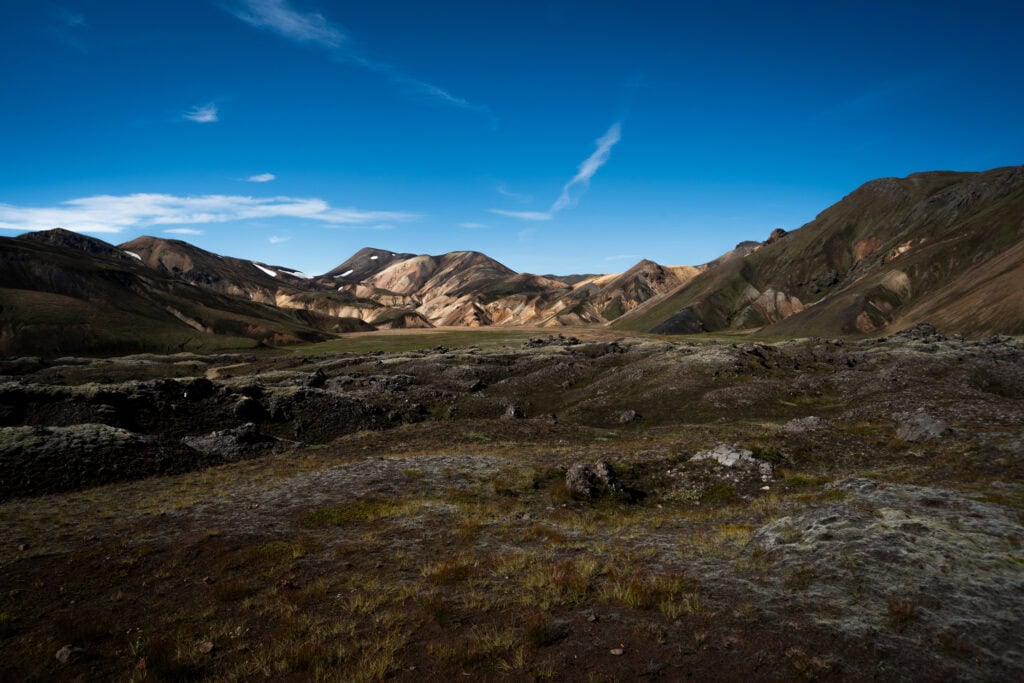
Highland access is a question of F-roads and the calendar. Our F-roads guide covers opening dates, river crossings and what a rental contract actually permits — and which vehicle you need to be allowed up there at all.
The North
Akureyri, Lake Mývatn and the Diamond Circle see a fraction of the south coast’s traffic and hold some of the country’s best water: Goðafoss on the way in, Dettifoss at the end of a long gravel road, and the geothermal ground around Mývatn, which photographs unlike anywhere else in Iceland. The north is also drier in summer and often clearer in winter than the south, which matters more for aurora work than most first-time visitors expect.
West of Akureyri, on the Vatnsnes peninsula, Hvítserkur is the single best reason to leave Route 1 in the northwest — a sea arch that is two entirely different subjects at low and high water.
The East
The town of Seyðisfjörður — colourful, photogenic, and usually quiet — sits at the end of a fjord that lights up magnificently in the evening. Be aware that cruise ships and the Smyril Line ferry occasionally bring visitors in numbers; check schedules in advance if solitude is a priority.
Planning Your Trip
Getting Around
A rental car is essential for serious photography. Iceland’s Ring Road (Route 1) connects most major locations. For the Westfjords or the Highlands, plan your route carefully — distances are long and conditions change quickly.
For F-roads (the Highland interior tracks), a 4WD vehicle is a legal requirement, not a suggestion. Check current road conditions at road.is before every drive. Iceland’s highland and interior landscapes are only accessible via F-roads — unpaved tracks that require a four-wheel drive vehicle and open only in summer. Our Iceland F-Roads Guide covers access, safety and what to expect.
What that means for a real route, day by day, is in our 10-day photography itinerary, and the vehicle side is covered in renting a car for Iceland photography.
Weather
Iceland’s weather changes fast — and wind, aurora forecasts, and road conditions each deserve their own attention. The Icelandic Meteorological Office — Veðurstofa Íslands — is the starting point for all three. A dedicated guide to weather tools and apps for Iceland photographers is coming soon.
Which forecasts to trust and which to ignore: weather, wind and planning tools for Iceland photographers.
Permits and Access
Some areas require permits, charge access fees, or have restricted visitor numbers. Always check current conditions with Umhverfisstofnun (Environment Agency of Iceland) and Ferðamálastofa (Icelandic Tourist Board) before visiting sensitive locations. Regulations change — what was freely accessible on a previous trip may no longer be.
Leave No Trace: The Non-Negotiable
Every location guide on this site includes a dedicated Leave No Trace section. Here, the principles that apply across all of Iceland:
One thing worth stating clearly: this guide is written for photographers — but the word covers everyone who points a lens at Iceland’s landscape, regardless of what that lens is attached to. A smartphone and a professional camera body carry identical responsibility. The barriers stepped over for Instagram Reels and the barriers stepped over for RAW files are the same barriers. The damage left behind is the same damage.
Stay on marked paths. Iceland’s vegetation, particularly lava moss, is extraordinarily slow-growing. A footprint can leave a visible mark for decades. If there is a path, use it — even if the view is slightly better from two metres to the left.
Respect barriers and ropes. They exist because the area behind them is either dangerous, ecologically sensitive, or both. Stepping over a barrier for a photograph is not a minor transgression — it is a direct contribution to landscape damage.
Respect hot springs. Iceland’s geothermal features are freely accessible and genuinely dangerous — water temperatures can far exceed boiling point, and the ground surrounding a spring can be unstable. Never enter an unmarked spring, stay on marked paths around geothermal areas, and do not introduce any substance — including soap — into the water. A dedicated section is included in the Leave No Trace Guide.
Iceland is not a playground. The landscape is raw, unpredictable, and genuinely unforgiving — and it doesn’t take a reckless decision to find yourself in serious trouble. I learned this on two separate trips, without ever leaving a marked path.
On one spring trip, a snow-covered field looked completely solid. Underneath was a deep hole I broke straight through — and walked away with a dislocated shoulder. On another, a slope that seemed manageable sent me sliding in conditions I simply wasn’t equipped for. I lost a tripod and came away with scrapes. It could have been considerably worse.
Spring is particularly deceptive. Snow and ice persist at lower elevations long after the calendar suggests otherwise. But winter demands even more respect — daylight windows are short, temperatures drop fast, and conditions can turn extreme with little warning. A situation that feels manageable at midday can become dangerous by late afternoon.
Check the forecast before you leave. Tell someone where you’re going. Carry the right equipment for the conditions — not just the right camera.
No photograph is worth your life. That is not a figure of speech.
No drone use without a permit in protected areas. Iceland’s national parks and many nature reserves prohibit drone flight. Check regulations with Umhverfisstofnun before your trip. Wildlife disturbance from drones — particularly during nesting season — is a serious concern.
Respect nesting seasons. Many of Iceland’s most iconic birds, including puffins and Arctic terns, nest on the ground. Approaching nesting sites too closely causes birds to abandon eggs. Keep a respectful distance and use a telephoto lens.
Take nothing. No rocks, no moss, no vegetation. This applies even to the black sand beaches.
Leave nothing. Pack out everything you bring in. Iceland’s remote areas have limited waste infrastructure.
Two specific cases where photographers do the most damage without meaning to: geotagging a location that cannot take the traffic, and photographing hot springs, where a single footprint in the sinter takes years to disappear.
Gear for Iceland: The Essentials
Packing List
Iceland photography gear — what actually matters
Iceland is hard on equipment. A few things that matter more here than in most locations:
Weather sealing. Rain, wind, sea spray, and glacial dust are constants. A weather-sealed camera body and lenses are not luxury items in Iceland.
For a full breakdown of what to pack and what to leave at home, see our Camera Gear for Iceland guide.
A sturdy tripod. Iceland is windy — sometimes seriously so. A lightweight travel tripod will struggle. Add a remote shutter release to avoid camera shake.
ND and polarising filters. Essential for waterfall photography (to achieve smooth water with longer exposures) and for managing Iceland’s frequently overcast but bright skies.
Spare batteries. Cold temperatures reduce battery performance significantly. Carry at least two batteries per camera body and keep spares warm in an inner pocket.
Lens cloths. Waterfall mist and sea spray reach further than you expect.
Most of what makes an Iceland frame work happens at shutter speeds between half a second and four minutes — the long exposure guide covers filters, wind and the settings for waterfalls, ice and ocean.
Where to Go Next
Explore the Guide
Where to go next
Six places to start, and the complete index below them.
Start here
Location Guides
Technical Guides
Planning
Ethics & Responsibility
Sources
- Umhverfisstofnun (Environment Agency of Iceland) — ust.is
- Ferðamálastofa (Icelandic Tourist Board) — visiticeland.com
- Veðurstofa Íslands (Icelandic Meteorological Office) — vedur.is
- Vegagerðin (Icelandic Road Administration) — road.is