
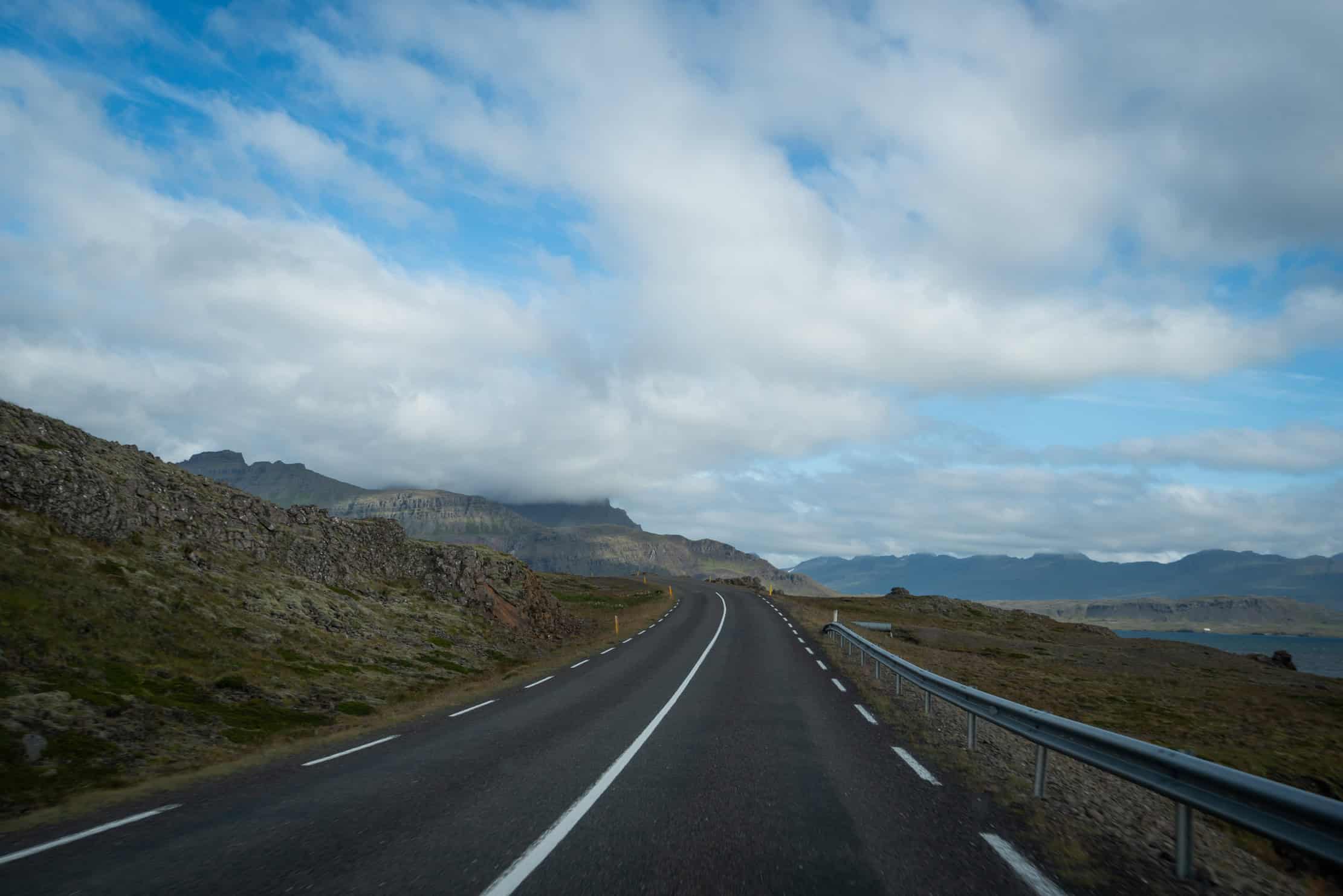
Built from what actually worked, not from a checklist
I want to be upfront about something before this itinerary starts: I have never spent exactly ten days in Iceland. My trips have run three, six, seven, and eight days — never that specific round number most guides default to. What I have done twice is drive the full Ring Road in seven honest days, and once spent six full days going nowhere near it, based entirely in the Westfjords with pools and rest days built into the schedule on purpose.
This itinerary is built from those two real experiences, stretched and combined into the ten-day shape that most readers are actually planning around. It is not a trip I’ve taken. It is a trip I would take, based on what six shorter ones taught me about what works and what doesn’t.
If you’ve read the Weather & Planning Tools guide on this site, you already know the core philosophy this itinerary is built on: fewer stops, more time at each, and the willingness to let weather move your plan rather than fight it. This is that philosophy turned into an actual day-by-day structure.
The Core Decision: Loop, or Deep Dive?
Before any itinerary, there’s a choice to make, and most guides skip past it.
A full Ring Road loop in ten days gets you a genuine sample of the whole country — south coast, east fjords, north, on the way back. The cost is time: long driving days, especially the stretch between the north and Reykjavík, which on both of my seven-day loops became a single exhausting push with no real stop in between. Ten days makes this more comfortable than seven, but the trade-off doesn’t disappear — it just softens.
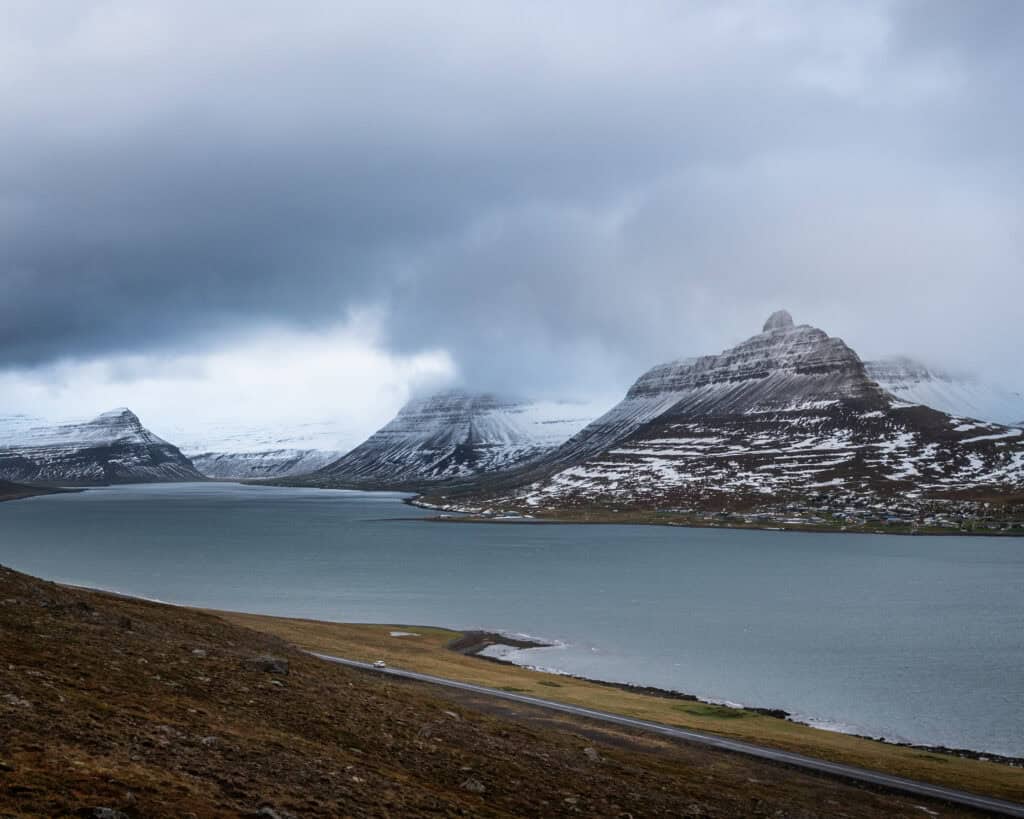
A single-region deep dive — the Westfjords, or the south coast and glacier lagoons, or the north around Mývatn — gets you real time at each location instead of a drive-by. My six days entirely in the Westfjords in 2021 remain some of the most relaxed, least rushed photography I’ve done in Iceland. We filled unstructured time with hot pools rather than the next item on a list, and the photographs from that trip are stronger for it.
This itinerary builds the loop version, because it’s what most first-time ten-day visitors are actually planning. But I’d genuinely encourage you to consider the deep-dive alternative at the end of this article before committing — especially if this isn’t your first Iceland trip.
Why Counter-Clockwise via Akranes
Most Ring Road guides send you south first — Golden Circle, Reynisfjara, Vík — then loop up through the east and back along the north. I go the other way, through Akranes toward the north and east first, saving the south coast and the Golden Circle for the end.
To be precise about what this does and doesn’t achieve: it doesn’t buy you extra time in the Westfjords or on Snæfellsnes — Route 1 via Akranes runs past that peninsula, not into it, and reaching the Westfjords properly means a separate detour this ten-day loop doesn’t have room for. What it does is reorder the regions along the Ring Road itself — sending you first toward the less-visited north and east, and saving the most famous, most heavily signed, easiest-to-shorten stops for last.
The reasoning is practical. If the trip runs long, the weather turns, or you’re simply tired by day nine, the locations easiest to cut short without real loss are the well-known ones — they’re well-documented, well-signed, and you can always see photographs of them if you miss the light in person. Put your best days and energy into the stretches that reward genuine time on-site, while you’re fresh.
One honest caveat: this isn’t the right call for everyone. If this is your first trip to Iceland and seeing the Golden Circle or Reynisfjara in person matters to you regardless of the crowds, don’t push them to the end on the theory that you’ll get to them eventually — a trip that runs short on day nine will cut exactly the locations you most wanted to see. This ordering suits photographers who are comfortable trading the famous stops for time elsewhere, or who already have some Iceland experience and know they can return for what gets missed. If the well-known sights are non-negotiable for you, put them earlier in the loop instead.
The Ten-Day Structure
A note before the day-by-day: how far you get on Day 1 depends entirely on arrival time — this is written from a Munich departure with a mid-morning Keflavík landing. Adjust accordingly, and treat every “day” below as roughly 24 hours of driving-and-shooting time, not a fixed calendar slot. Snæfellsnes is deliberately not part of this route — it’s a worthwhile detour off Route 1, not a stop along it, and adding it here would mean cutting a day from somewhere else in this already-tight structure. See the Snæfellsnes guide if you’d rather build a trip around it instead.
Counter-clockwise Ring Road
Ten days — the day-by-day structure
Direction: counter-clockwise via Akranes — north and east first, south coast last. This puts your freshest days in the regions that reward genuine time on-site, and saves the most famous, easiest-to-shorten stops for when you have less energy to spare. See the full article for why — and for when this logic doesn’t apply to your trip.
Day 1 — North toward Húnaflói. Collect the car and drive as far as conditions and daylight allow, aiming for the Hótel Laxárbakki area in the northwest. A few worthwhile stops sit along this stretch of Route 1 if you have daylight to spare.
Day 2 — Vatnsnes and on to Akureyri. Hvítserkur, and Kolugljúfur — a canyon largely absent from the standard tourist circuit and worth the detour on that basis alone — before continuing to Akureyri or its surroundings as your base for the next stretch.
Days 3–5 — North, home-based. Three days from a single base covers Mývatn, Dettifoss, and Goðafoss without rushing between them — see the respective guides for what each day there can look like.
Day 6 — East to Egilsstaðir. A longer driving day, with stops possible en route depending on the season and your pace. End it at Vök Baths near Egilsstaðir — a geothermal soak that’s become one of my preferred stops on this side of the country.
Day 7 — Seyðisfjörður, then south toward Höfn. The detour over the mountain pass to Seyðisfjörður is worth the time if the pass is open — check the Seyðisfjörður guide for ferry and cruise ship timing before you commit the day to it. From there, the long coastal drive to Höfn, ending with Stokksnes (Vestrahorn) if the weather at Stokksnes cooperates — it often doesn’t, so build in a backup evening.
Day 8 — Jökulsárlón and Diamond Beach, or the honest trade-off. This is the point in the trip where the ten-day structure gets genuinely tight, and there’s no version of “see everything unhurried” that fits without a decision. Three honest options:
- Trim the north. Spend two days in the Mývatn region instead of three (Days 3–5 above), and bank the saved day here — giving Jökulsárlón and Diamond Beach the unhurried day they deserve without compressing anything else.
- Extend the trip. If an eleventh calendar day is available before departure, treat it as a full extra day rather than pure airport logistics — this absorbs the pressure without cutting anything from the north.
- Accept the trade-off and move fast. Combine Jökulsárlón, Diamond Beach, and the push toward Vík into a single day. This works against the slow-travel principle this site generally argues for — both the Jökulsárlón guide and glacier photography guide recommend against rushing this stretch — but a ten-day trip with fixed dates sometimes has no better option. If you take this route, know going in that you’re trading depth for breadth here, and plan to accept fewer, more selective shots rather than trying to cover everything on the list.
Day 8 — The Decision
Jökulsárlón & Diamond Beach: three options
This is the point in the ten-day structure where the itinerary gets genuinely tight. There is no version of “see everything unhurried” that fits without a decision. Make it now, at the planning stage.
Don’t discover this on the road. The tightness of Day 8 is visible from the planning stage. Photographers who arrive at Jökulsárlón on a tight schedule and feel the pressure to move on are photographers who leave images behind. Decide which of the three options above you’re taking before you book anything — not on Day 5 when the week is already running.
Whichever option you choose, don’t discover the tightness of this day by accident on Day 5 — decide now, at the planning stage, which trade-off you’re making.
Day 9 — On to Vík. The glacier coast toward Vík, with time to look around the region rather than treating it as a pass-through.
Day 10 — South coast classics toward Reykjavík. Skógafoss and Seljalandsfoss if you still want them — both easy to shorten if the trip has run long or the weather elsewhere was generous enough already.
The day that doesn’t count. With an early flight home, departure day is airport logistics, not photography — unless you’ve taken the “extend the trip” option above, in which case it finally does.
What I’d Change If I Had More Time
If this were genuinely my own trip rather than a constructed itinerary, the first thing I’d cut is the strict day-by-day structure itself. On my real Westfjords week, the best images came from staying an extra half-day somewhere the weather turned out better than forecast, or moving on early when it didn’t.
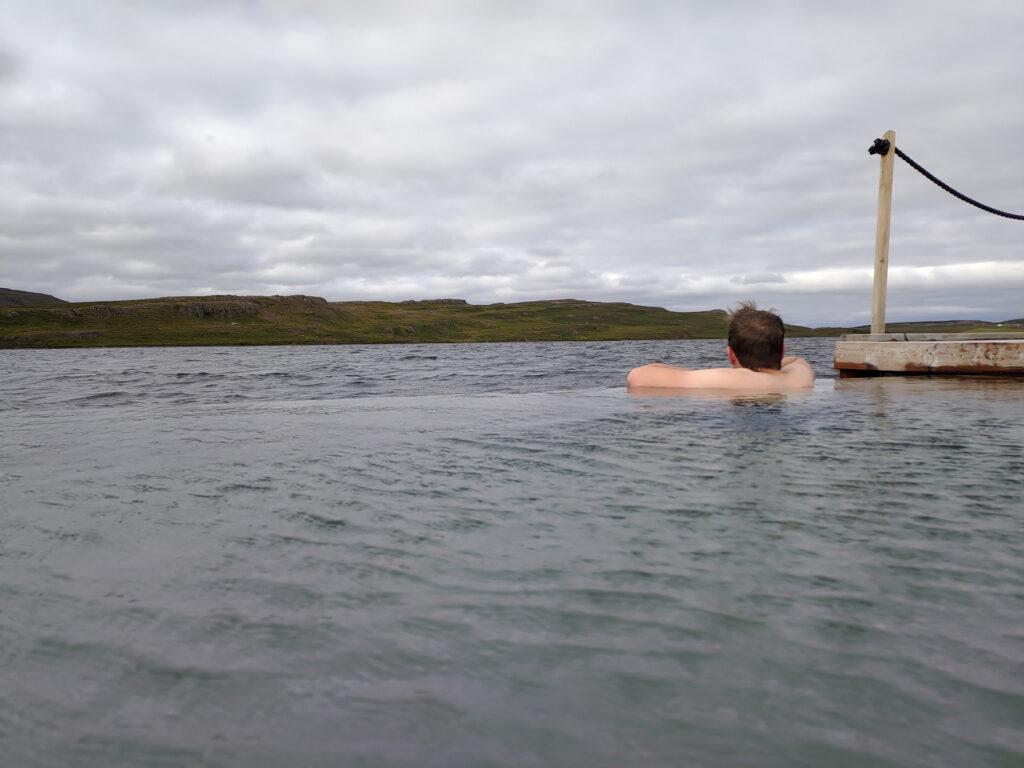
But I want to be honest about something else too: the relaxation that made that week so good wasn’t only about photography. It came from doing nothing in particular — sitting in a warm pool for an hour with no plan, going down an outdoor water slide in falling snow because the water running through it is heated and somehow that never stops being funny, talking to whoever happened to be in the next lane at the local swimming pool, eating somewhere with no view and no photographic value whatsoever simply because it was good. Iceland gives you extraordinary landscapes, but some of what makes a trip actually restorative has nothing to do with the camera at all — it’s the land and the people, taken in without an agenda. Build room for that into a ten-day trip and you’ll come home with better photographs anyway, but that shouldn’t be the reason you do it.
Use the plan above as a skeleton, not a script — and see the flexibility principles in the Weather & Planning Tools guide for how to actually build that adaptability in rather than just intending to.
Camper vs. Guesthouse: What Actually Saves Money
I’ve never camped in Iceland — it isn’t how I travel, and this site doesn’t publish guidance beyond genuine field experience. But the question of whether a camper van actually saves money over guesthouses and hotels comes up often enough that it deserves an honest look, even without personal camping nights behind it.
On paper, campers can be cheaper — but the gap is smaller than it looks. Camper rental rates in Iceland are frequently comparable to, or higher than, a standard rental car plus budget guesthouse accommodation, once you factor in campsite fees (rarely free), fuel (campers are heavier and less efficient), and the reality that Iceland’s weather regularly pushes travellers into paid showers, laundry, or an unplanned night indoors anyway.
For photographers specifically, the calculation shifts further. A few considerations that matter more for photography than for general backpacking:
- Battery charging depends on campsite access to power, which isn’t universal and isn’t always available exactly when you need it for an early departure.
- Keeping gear dry and warm overnight is straightforward in a heated guesthouse room and genuinely harder in a vehicle exposed to Iceland’s temperature swings and condensation.
- No fixed backup for storage. A guesthouse room is a stable base to download and back up a day’s shooting. A moving vehicle is a less controlled environment for that routine.
None of this makes camping the wrong choice — plenty of photographers do it well, and the flexibility of sleeping wherever the light was good has real appeal. It simply means the honest answer to “does it save money” is: sometimes, modestly, and the photography-specific costs eat into that saving more than general travel costs would. If budget is the primary driver, a careful cost comparison against off-season guesthouse rates — which can be genuinely affordable outside July and August — is worth doing before assuming a camper is the cheaper route.
A Note on Responsible Pacing
The itinerary above already reflects the site’s core position on this, but it’s worth stating directly: an itinerary that visits everything and lingers nowhere serves neither the photographs nor the landscape. Rushing between locations means less careful attention to marked paths, less patience to wait for the right light instead of forcing a shot, and less willingness to turn back when conditions aren’t right. See the Leave No Trace guide for the fuller version of this principle — but it starts here, at the planning stage, before you’ve even left home.
Alternative: The Single-Region Deep Dive
If this isn’t your first Iceland trip, or you’re simply someone who prefers depth over breadth, consider skipping the loop entirely. Ten days in the Westfjords alone — following the structure of the Westfjords guide and Westfjords Deep Dive — or ten days split between the south coast and the glacier region, produces a fundamentally different and, in my experience, more relaxing trip. You’ll see less of Iceland. You’ll photograph more of it properly.
Sources
- Vegagerðin (Icelandic Road Administration) — road.is
- Veðurstofa Íslands (Icelandic Meteorological Office) — vedur.is
- Ferðamálastofa (Icelandic Tourist Board) — visiticeland.com